
Stove God Cooks Comes Home: From Syracuse’s Underground to a New Chapter With Swizz Beatz
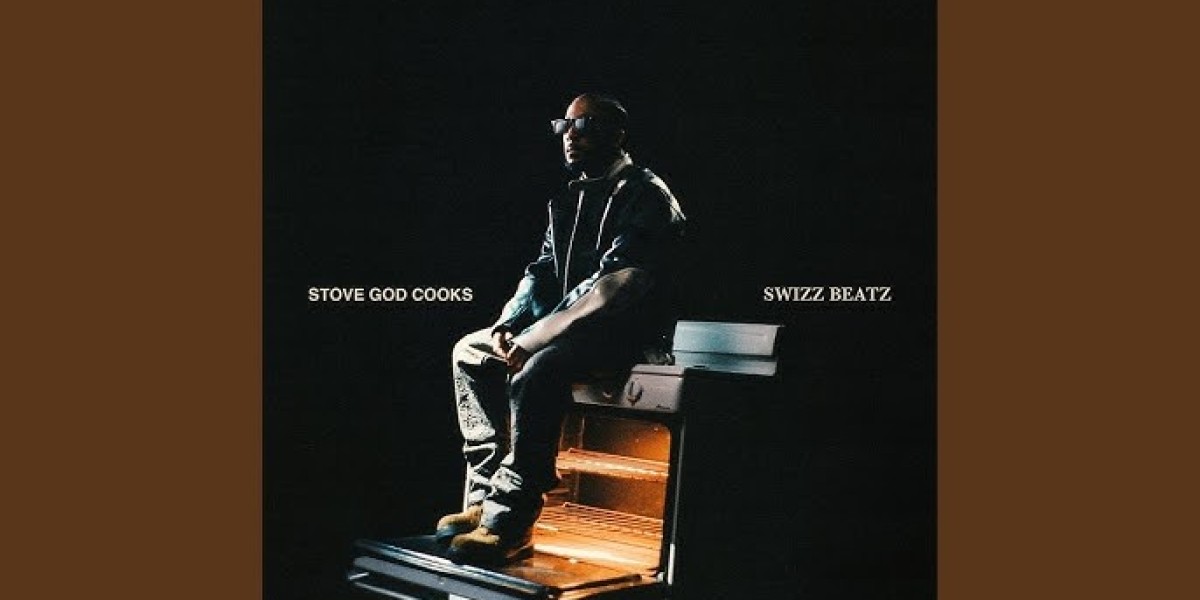
For Stove God Cooks, “STOVIE’S HOME (Down Down)” is more than a title. Arriving November 6, 2026, alongside news of a partnership between Warner Records and Babygrande Records, the Swizz Beatz-produced single signals renewed movement in a career that has spent years balancing extraordinary promise against frustrating delays. Its accompanying video, directed by Azze, puts Stove and Swizz together on screen, giving their developing partnership a visual introduction. With the sophomore album All This For Me? expected in early 2027, the release carries the weight of a homecoming—not to a place, necessarily, but to the position Stove has been working toward for more than a decade.
That history matters. Stove did not arrive fully formed with a famous producer beside him. Before the acclaimed debut, the Griselda collaborations, and the new major-label arrangement, there was an aspiring rapper from Syracuse trying to find people who understood his voice. His story is about recognition, but it is also about artistic self-definition: learning the difference between getting an opportunity and knowing what to do with it.
Syracuse, Gospel, and the Making of a Voice
Stove God’s musical foundations reach back to his family. Growing up in Syracuse, he spent time in his grandfather’s church and learned gospel choir music from his mother. His older brother introduced him to rapping and to artists including Nas, AZ, Half A Mill, and Big Pun. Those influences supplied two complementary educations: one in melody and emotional expression, the other in intricate writing and commanding street narratives.
That combination helps explain why Stove’s music feels different even when its subject matter belongs to familiar rap territory. His voice can stretch a phrase into something halfway between a hook and an exclamation. He does not simply rap over soul-inflected production; his singing and cadence bring their own soulful character. In a 2023 interview with The Harvard Crimson, he described the music of The LOX, Mase, and the Notorious B.I.G., shaped by Puff Daddy’s approach, as “gospel mixed with the streets.” It was a mixture he recognized from his own upbringing.
Syracuse, however, offered few obvious blueprints for national success. Unlike an aspiring Brooklyn rapper surrounded by stories of local stars, Stove did not grow up with the same visible evidence that someone from his city could become a major hip-hop figure. That absence made the eventual breakthrough more than a personal milestone: it required imagining a route that was not already clearly marked.
Before Stove God: The Aaron Cooks Years
Performing as Aaron Cooks, he began attracting attention beyond Syracuse around 2015. Lord Jamar discovered his music online, and Busta Rhymes subsequently offered him an opportunity through The Conglomerate. The exposure was substantial: interviews, freestyles, a BET Awards cypher appearance, and videos that suggested a formal debut was approaching.
Working with Busta also meant witnessing an extraordinary work ethic. Stove later recalled spending years around the veteran’s lengthy nighttime studio sessions, absorbing both his creative discipline and lessons about the business. For an emerging artist, it was an apprenticeship with someone who understood performance, records, and longevity.
Yet visibility did not immediately produce artistic clarity. In a 2020 interview with DJBooth, Stove explained that he eventually stepped back because he felt the people around him did not fully understand the music he wanted to make. The problem was not a lack of talent or influential support. It was a mismatch between other people’s expectations and his own instincts.
That distinction is central to his history. His eventual reinvention was not simply a new stage name attached to the same plan. It followed a period in which he had to recover confidence in his own judgment.
Roc Marciano and the Arrival of Reasonable Drought
Roc Marciano became the crucial next collaborator. Stove traced their connection to 2018, when Marciano was working on Behold a Dark Horse. As their relationship developed, Marciano’s production helped him reconnect with the excitement of making music. By late 2019, they had recognized the potential of a full-length project together.
The result was Reasonable Drought, released in March 2020 and produced entirely by Marciano. Rather than forcing Stove toward a predetermined commercial formula, the collaboration allowed his personality to become the organizing principle. Marciano supplied the musical environment; Stove filled it with imagery, unusual phrasing, humor, melody, and a sense that every line might contain another discovery.
The album also introduced the Stove God Cooks name. He later explained that the identity emerged as the project began to feel like an authentic invitation into his world. The kitchen imagery was not incidental branding: it helped frame the perspective and conversational atmosphere he wanted the music to convey.
Even the album’s title carried ambition. In his DJBooth interview, Stove connected Reasonable Drought to Jay-Z’s Reasonable Doubt, describing a desire to make music that offered listeners something meaningful and lasting. He approached the project with the urgency of someone who believed this might be his final chance to explain himself properly.
Its success established the artistic foundation that everything afterward would build upon.
Westside Gunn and the Power of the Right Introduction
If Marciano helped Stove define his sound, Westside Gunn helped bring that sound to a wider audience. After hearing Reasonable Drought, Gunn contacted him about appearing on Flygod Is an Awesome God 2. Stove recalled Gunn telling him that the album was a classic that too few people knew about—and that the right features could send listeners back to discover it.
The strategy worked. Stove’s three appearances on Gunn’s July 2020 album became the beginning of a much broader relationship with the Griselda network. By January 2023, The Harvard Crimson reported that he had recorded more than 20 guest verses across Griselda and affiliated releases.
Those collaborations demonstrated his versatility. He could contribute a sung melody, a spoken hook, or a verse that redirected a track’s energy. On Gunn’s 2022 album 10, “Science Class” placed him alongside Busta Rhymes, Raekwon, and Ghostface Killah—a striking meeting of his early mentorship and his newer artistic world.
Importantly, the association did not erase his origins. Stove was a Syracuse artist moving within a Buffalo-centered movement, bringing his own history and vocal identity rather than merely adopting somebody else’s template.
The Long Wait for Another Album
The momentum made a follow-up seem inevitable. Its arrival proved considerably more complicated.
In January 2023, Stove discussed a forthcoming project curated by Westside Gunn, describing it as an intensified extension of Reasonable Drought. Those comments captured his confidence at the time, but the anticipated release did not become the straightforward next chapter fans expected.
By November 2026, Stereogum described a prolonged dispute with Babygrande that had stalled his momentum, while noting that the relationship had since moved toward reconciliation. Billboard’s reporting likewise situated the new announcement after false starts, including a scrapped Goat Stamp project and an earlier release plan.
The distinction matters: Stove remained artistically visible, but a major new solo statement remained elusive. His features kept demonstrating his ability while the missing album became part of the conversation around him.
“STOVIE’S HOME (Down Down)” Makes the Partnership Visible
Against that background, the new single arrives with institutional significance as well as musical purpose. Released November 6, “STOVIE’S HOME (Down Down)” introduces the Warner–Babygrande partnership and points toward All This For Me?. Swizz Beatz produces the track and executive-produces the forthcoming album; Billboard also reports that he will produce the full project.
Stereogum characterizes the single as a glossier version of the hard, chaotic music Stove previously made with his Griselda collaborators. That description suggests evolution rather than abandonment: a broader presentation built around an artist whose appeal has always depended on personality.
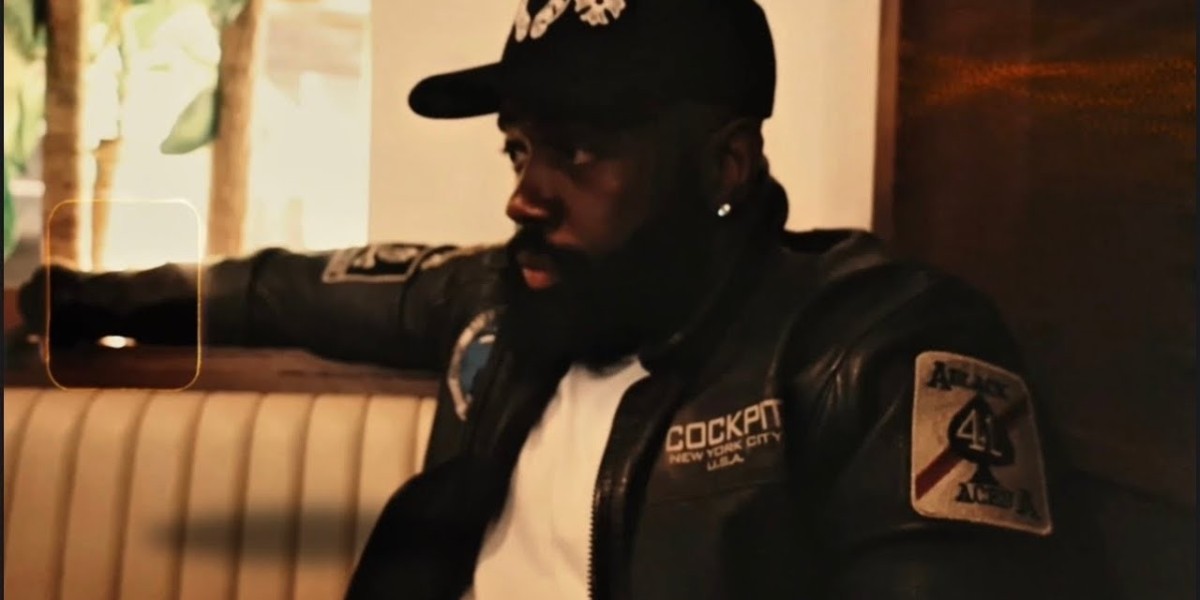
The Azze-directed video gives that new alliance a straightforward visual form. Published coverage describes Stove and Swizz performing against a lightning backdrop, with additional performance clips flashing into the edit. The emphasis is on the artists and their presence rather than an elaborate narrative.
Read in the context of Stove’s career, that presentation has an effective simplicity. The central image is the partnership itself: Stove beside the producer shaping his next major release. The lightning imagery supplies spectacle, while the performance-driven format keeps attention on the people announcing this new phase. That is an interpretation of the reported visual setup, rather than evidence of a stated directorial concept.
The title does additional work. “Stovie’s Home” sounds like an arrival announcement, but his history makes it resonate as a return to forward motion. After years in which the next album often seemed close without materializing, a new single, video, and label arrangement give the promise a more concrete shape.
A New Chapter, With Something Still to Prove
All This For Me? is currently expected in early 2027, with no exact release date announced. That uncertainty deserves acknowledgment, particularly given the history of postponed plans. A compelling rollout is not yet a completed album.
Still, “STOVIE’S HOME (Down Down)” brings Stove’s story into focus. Gospel supplied part of his musical vocabulary. Busta Rhymes supplied an early apprenticeship. Roc Marciano helped him discover the sound that made his name meaningful. Westside Gunn amplified it. Now Swizz Beatz stands beside him as the next chapter takes shape.
The question is no longer whether Stove God Cooks has a distinctive voice. His history has established that. The question is what happens when that voice finally gets the sustained platform—and the long-awaited second album—to match its promise.