.png)
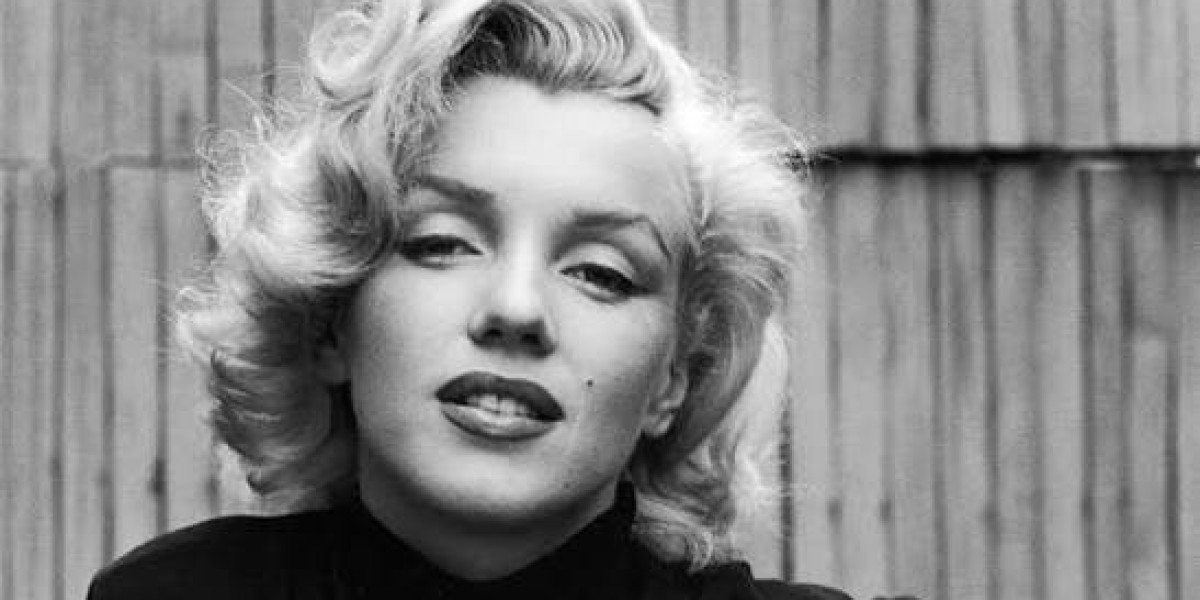

A hundred years after her birth, Norma Jeane Baker remains the most famous woman in the world. As the summer of 2026 brings an onslaught of centennial celebrations—from record-breaking drag brunches in Palm Springs to multi-million-dollar Julien’s auctions in Los Angeles—the question is no longer who Marilyn was, but why we still refuse to let her go.
There was a peculiar electricity in the air over Los Angeles on the morning of June 1, 2026. If you stood on the sweeping terrace of the Academy Museum of Motion Pictures, looking out over the hazy, sun-bleached expanse of the Hollywood Hills, you could almost convince yourself that the ghosts of the studio system were still running the town. Inside the museum's darkened galleries, the illusion was total. The new exhibition, Marilyn Monroe: Hollywood Icon, had opened its doors just hours earlier, offering a nine-month immersion into the life, the costumes, the scrawled diary entries, and the inescapable gravitational pull of a woman who has been dead for sixty-four years but whose image is currently more ubiquitous than ever.
We are living through the Marilyn Centennial, a global cultural event commemorating what would have been Norma Jeane Baker's 100th birthday. It is a moment of dizzying paradox. We exist in a hyper-modern, hyper-fragmented 2026 zeitgeist—one dominated by the raw, unpolished, lyric-overlay TikTok confessionals of artists like Olivia Rodrigo and the curated authenticity of influencer culture. Yet, hovering above it all, rendered in platinum blonde and shimmering rhinestones, is the ultimate mid-century manufactured goddess. Marilyn Monroe has not only survived the demise of the era that created her; she has devoured every era that followed.
The celebrations are everywhere, and they are overwhelmingly lavish. In New York, the Empire State Building was bathed in a brilliant, camera-flash white in a ceremony led by Camille Kostek, serving as the modern conduit for Monroe’s legacy. Across the Atlantic, the National Portrait Gallery in London unveiled Marilyn Monroe: A Portrait, an exhaustive exhibition that strips away the motion-picture artifice to examine the raw materials of her fame through the lenses of Milton H. Greene, Richard Avedon, and Eve Arnold. Meanwhile, the British Film Institute has mounted a two-month retrospective of her filmography, thrusting The Misfits—her melancholic swansong—back onto the silver screen where it belongs.
But to understand the true business of the Marilyn Centennial, one must look at the commerce. Authentic Brands Group, the corporate behemoth that manages Monroe's estate, has orchestrated a masterclass in posthumous brand expansion. The luxury collaborations that launched this June read like the itinerary of a particularly indulgent Euro-trip. In Switzerland, Blancpain unveiled the "Ladybird Tribute," a capsule collection of seven breathtaking timepieces inspired by a diamond-encrusted cocktail watch Monroe herself once wore. At Rinascente in Milan, GUESS took over the department store’s famed windows to launch a sprawling Marilyn capsule collection, while Nine West flooded the market with crystal-accented slingbacks. For those with deeper pockets and a thirst for the genuine article, Julien’s Auctions in Los Angeles hosted the “100 Years of Marilyn” sale on June 4th, auctioning off nearly 200 pieces of memorabilia, including unseen photographs and heavily annotated scripts that reveal the anxious, meticulous actress beneath the breathless facade.
Why, a full century after she took her first breath in a charity ward at the Los Angeles County Hospital, are we still so entirely captivated by her?
“Marilyn is the ultimate mirror,” says Dr. Evelyn Thorne, a cultural historian who contributed to the Academy Museum’s retrospective. “In the 1950s, she reflected post-war America’s complicated, hypocritical relationship with sexuality. In the 1980s and 90s, thanks to Madonna and the MTV generation, she became a symbol of defiant, winking glamour. Today, in 2026, a generation raised on the internet looks at Marilyn and sees the original victim of the attention economy—a woman who went viral before the concept existed, and who was ultimately consumed by the algorithm of the studio system.”
There is a tragic romance to Marilyn that fits perfectly into the modern discourse surrounding mental health and the perils of fame. When we look at her now, we are armed with the vocabulary of trauma. We see the foster care background, the endometriosis, the crippling stage fright, the barbiturate addiction, and the misogyny of the studio executives who paid her a fraction of her male co-stars' salaries. We no longer view her simply as the dizzy blonde of The Seven Year Itch; we view her as a survivor who was ultimately crushed by the weight of her own avatar.
Yet, to focus only on the tragedy is to miss the sheer, unadulterated joy of her afterlife. If you want to see the beating heart of Marilyn’s legacy in 2026, you shouldn't just look at the somber museum exhibits. You must drive two hours east of Los Angeles into the baking heat of the Coachella Valley.
Palm Springs has always had a proprietary claim on Marilyn. It was here, at the Racquet Club, that she was supposedly discovered by agent Johnny Hyde. Today, a towering, 26-foot-tall sculpture of Monroe in her billowing white subway dress—aptly titled Forever Marilyn—stands in the center of downtown, serving as the city’s unofficial mascot and a lightning rod for endless zoning controversies.
For the centennial, Palm Springs did not do somber. Palm Springs did camp.
From May 29th to June 1st, the city hosted Marilyn 100: A Centennial Film Celebration. The pinnacle of the weekend was not a dry panel discussion on her acting technique, but the "Marilyn 100th Birthday Drag Brunch," a glitter-soaked extravaganza that proved her image belongs just as much to the LGBTQ+ community as it does to cinema purists. Monroe has long been a patron saint of drag—her hyper-femininity was always a performance, a deliberate and masterful exaggeration that queer culture instantly recognized and revered.
The weekend culminated in "The Great Marilyn Record Setting Attempt." At the base of the Forever Marilyn statue, organizers sought to break the world record for the largest gathering of people dressed as Marilyn Monroe. The goal was 500. They got over 1,000. Imagine the surreal, Fellini-esque sight: a thousand Marilyns baking in the 105-degree desert sun. There were tall Marilyns, bearded Marilyns, toddler Marilyns, and octogenarian Marilyns, a sea of platinum wigs and halter dresses, all swaying together and singing "Happy Birthday" in breathy unison. The event raised substantial funds for Palm Springs Pride and local LGBTQ+ charities, proving that even a century later, the girl who famously said she "just wanted to be wonderful" is still doing good work.
(For a glimpse into the dizzying scale of the Palm Springs record attempt, spectacular aerial footage from the centennial gathering can be viewed here: https://www.youtube.com/watch?v=sTcbqxEUh34 )
It is a peculiar thing to celebrate the 100th birthday of someone who remains perpetually frozen at thirty-six. Because she never aged, she never had the chance to fall out of fashion, to make embarrassing late-career missteps, or to fade into the gentle obsolescence of a Hollywood elder stateswoman. She bypassed the indignities of growing old in the public eye and went straight into the realm of mythology.
But this freeze-frame immortality requires constant maintenance. The Marilyn we consume today is a highly curated product. When we buy the Swarovski crystal replicas of her jewelry or sip the special-edition Piper-Heidsieck champagne—a nod to her famous quip that she went to sleep wearing Chanel No. 5 and woke up to a glass of Piper-Heidsieck—we are not communing with Norma Jeane Baker. We are buying into the idea of Marilyn, the brilliant, blinding light she managed to emit while the flashbulbs were popping.
This disconnect between the woman and the brand is the central tension of her legacy. At the Westwood Village Memorial Park Cemetery, away from the glittering exhibitions and the drag brunches, the reality of her absence is stark. On the morning of June 1st, fans gathered quietly around her simple bronze crypt marker, which is perpetually stained pink from the lipstick kisses of pilgrims. They brought 100 white roses. They brought a cake. They stood in the quiet California morning and remembered a woman who was infinitely more complex, infinitely more intelligent, and infinitely sadder than the posters on dorm room walls would suggest.
There is a moment in The Misfits—written for her by her then-husband, Arthur Miller—where Marilyn’s character, Roslyn, stands in the Nevada desert and screams at the men trying to wrangle wild mustangs. "You're only happy when you can see something tear itself to pieces!" she cries. It is one of the rawest, most unguarded moments she ever committed to film. It is the sound of the real woman bleeding through the celluloid.
As the summer of 2026 rolls on, and the centennial celebrations fade into the normal hum of pop culture noise, that voice remains. In an era where every moment is documented, filtered, and uploaded, Marilyn Monroe stands as the ultimate testament to the power of the image. She gave the camera everything she had, to the point where there was nothing left for herself. We are still looking at her, 100 years later, because she was the first to show us how brightly a star could burn right before it collapsed.
She was the invention that outlived the inventor. She is the ghost in the flashbulb. And as long as there is a screen left in the world to project her upon, she is never, ever going away.