.png)
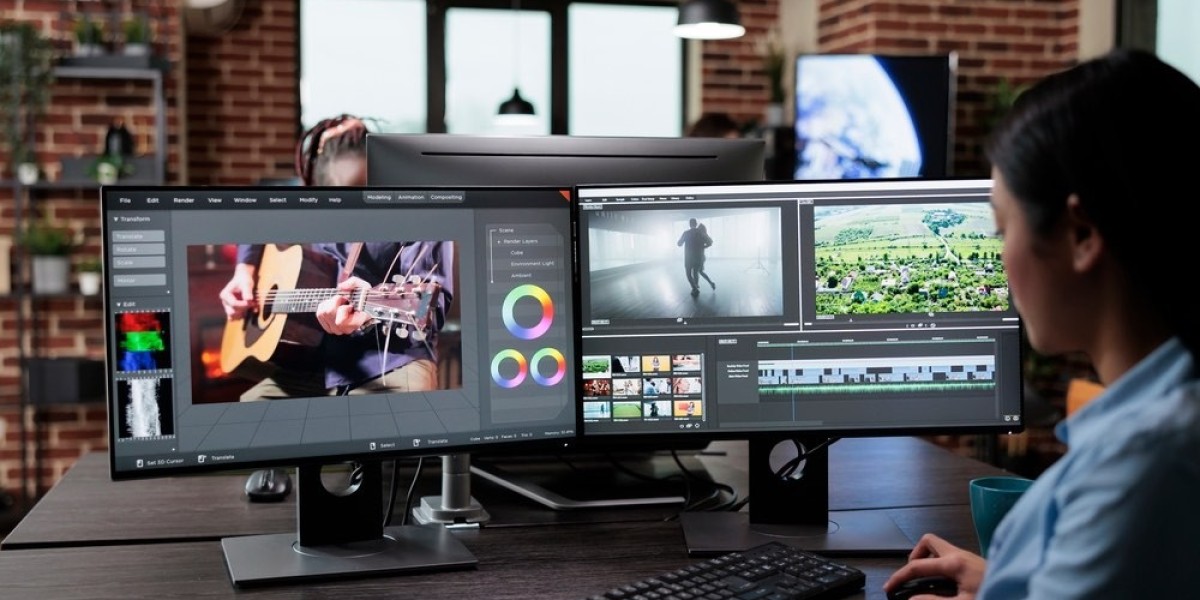

The Cut That Changes Everything
There is a moment in every edit—usually sometime after the coffee has gone cold, the hard drives have started their low mechanical sermon, and the timeline has become a small, multicolored indictment of human ambition—when the video editor sees the truth.
Not the truth as it was pitched in the treatment. Not the truth the client imagined during a sunlit production meeting three weeks earlier, when everyone used words like “elevated,” “authentic,” and “viral” without any apparent fear of consequence. The real truth.
Perhaps the interview subject is more compelling when she hesitates than when she delivers her clean, polished sound bite. Perhaps the wide drone shot, although gorgeous and undoubtedly expensive, is slowing the whole thing to a crawl. Perhaps the story that seemed to be about a sneaker launch is actually about a young athlete’s need to escape the neighborhood that made him. Perhaps the joke that delighted everyone on set is now a crime against pacing.
The editor sees it. Then, with a trim, a cut, a silence, an unexpected reaction shot, or a piece of music that arrives half a second later than it did before, they make everyone else see it, too.
That is what a really good video editor does. They do not simply remove mistakes and arrange clips in a respectable order. They are the invisible architect of feeling. They decide when an audience leans forward, when it laughs, when it understands, when it gets bored, and—if the work is fortunate—when it remembers.
The modern video editor occupies a strange, central position in culture. They are part technician, part storyteller, part psychologist, part negotiator, and part emergency-response unit for footage that has arrived mislabeled, undershot, overshot, poorly recorded, or accompanied by a client note reading simply: “Can we make it more cinematic?”
Video editing is fundamentally the act of selecting, combining, rearranging, and shaping footage, often alongside sound, music, effects, and graphics, into a finished work. But the job requires both creative judgment and technical precision—not merely software fluency. The difference between a competent editor and a brilliant one is not how many transitions they know. It is whether they understand what the audience needs to feel next.
The Editor Is the Last Storyteller
A director may have the vision. A cinematographer may have found the image. A producer may have made the impossible happen on a budget that would insult a local wedding videographer. But the editor is the last person with the power to decide what story the footage actually tells.
This is not always a comfortable authority.
Raw footage is full of possibility, but it is also full of deception. On set, people can mistake effort for drama. A difficult scene feels important because it took six hours to capture. A painstakingly lit shot feels essential because it required a small army and a smoke machine. A perfectly articulated interview answer may seem indispensable because it answers the question exactly as asked.
Then the editor opens the footage.
They see that the six-hour scene has no tension. The beautiful shot tells the audience nothing. The clean interview answer is technically useful and emotionally dead. Meanwhile, a glance between two people, captured in the margin of a take, contains more life than the carefully prepared dialogue ever did.
The editor’s responsibility is to find the live wire.
Storytelling is among the most essential skills in the profession because a video editor determines how viewers receive information, emotion, character, conflict, and resolution. In a documentary, that may mean discovering the human stakes buried beneath a mountain of interviews and archival footage. In a commercial, it may mean establishing desire before a product appears. In a short-form social video, it may mean making the central promise unmistakable in the first two seconds, before the viewer’s thumb performs its merciless little flick upward.
A great editor understands that every edit makes an argument.
Cut from a person’s face to an empty room, and you suggest loneliness. Hold too long after a joke, and you create discomfort. Remove the pause before an answer, and a subject seems more confident. Leave it in, and they become vulnerable, evasive, thoughtful, or afraid. Put an image beside a line of narration, and the audience will assume they belong together—even when they do not.
This power is why good editors must possess not only instinct but ethics. Editing can clarify reality, but it can also distort it. The ability to create meaning from juxtaposition is not a license to manufacture meaning that was never there.
The best editors know the difference.
Timing Is a Form of Intelligence
There is no universal rule for when to cut.
People often speak of “fast editing” as if speed itself is proof of modernity, as though a dozen cuts in six seconds automatically transforms a mediocre idea into a thrilling one. It does not. Rapid editing can produce urgency, comedy, chaos, seduction, excitement, or panic. It can also produce the feeling of being trapped inside a casino slot machine designed by someone with unresolved issues.
Likewise, a long take is not automatically profound. Holding on a face can create intimacy; it can also make the audience wonder whether the editor has left the building.
The question is never simply, *How fast should this be?* The question is, *What is the emotional tempo of this moment?*
A really good editor has rhythm. They feel when a shot has given everything it can give, when a reaction needs room, when a music cue should arrive, when dialogue should overlap, and when silence is doing more work than another line ever could.
This is especially true in interviews. The amateur editor is often terrified of a pause. They cut out every breath, every hesitation, every searching glance toward the floor. The result may be efficient, but it can leave the speaker sounding less human than a navigation app.
The skilled editor knows that a pause is not empty. It can contain grief, calculation, embarrassment, longing, exhaustion, recognition. It can tell us that a person is choosing how much of themselves to reveal.
The same principle applies to comedy. Comedy is not merely writing; it is measurement. A reaction shot held one beat too long can destroy a punchline. A cutaway inserted too soon can announce the joke before the audience has had time to find it. The editor is working with fractions of seconds, which is perhaps the least glamorous way to describe magic.
Pace and timing are widely recognized as key qualities in video editing because they shape continuity, attention, and emotional impact. But they cannot be reduced to a checklist. Timing is learned through watching, cutting, failing, recutting, and developing the nerve to trust a moment when it does not behave according to formula.
Technical Mastery Is the Price of Entry
The romantic mythology of editing tends to focus on the inspired cut: the creative genius alone in a dark room, discovering the movie inside the mess. This mythology is attractive because it is flattering. It also overlooks the fact that the editor probably spent the previous three hours relinking offline media, rebuilding a corrupted project file, transcoding footage from a codec last seen in an industrial surveillance system, and trying to determine whether “FINAL_final_v9_USE_THIS_ONE” is, in fact, the final file.
Technical proficiency is not the whole job, but it is the foundation that makes the creative work possible.
A professional video editor should be fluent in at least one major non-linear editing platform—such as Adobe Premiere Pro, DaVinci Resolve, Avid Media Composer, or Final Cut Pro—and comfortable enough with adjacent tools to work across real production environments. Editors are also commonly expected to understand color correction, sound design, motion graphics, file handling, and delivery requirements.
But “knowing the software” means more than memorizing shortcuts. It means understanding workflows.
It means knowing how to ingest and organize footage so that an editor can find the right take when the client is breathing heavily behind them. It means using proxies for high-resolution media without accidentally exporting a 480p disaster to a national brand. It means understanding frame rates well enough to avoid motion that looks like an accidental séance. It means syncing multicamera footage, matching audio, maintaining clean project structure, and backing up work before a hard drive decides it has given enough to the relationship.
A strong editor understands codecs, export settings, aspect ratios, captions, loudness standards, color spaces, media relinking, versioning, and the strange political geography of client approvals. They know that a beautiful 16:9 master is not the same thing as an effective vertical video. They know that a social platform may autoplay without sound, that captions are not merely an accessibility feature but a storytelling layer, and that a thumbnail can determine whether all the work that follows gets seen at all.
Technical skill also includes visual literacy. An editor should be able to recognize inconsistent exposure, mismatched white balance, awkward framing, continuity errors, poor eyelines, shaky composition, and the difference between footage that is intentionally raw and footage that simply looks as though it has survived a minor earthquake.
They should know enough about sound to hear the problems others miss: room tone that changes between cuts, dialogue that disappears under music, a harsh “S,” a hum in the background, or a silent gap that feels accidental rather than dramatic.
Audiences will forgive a slightly imperfect image before they forgive bad audio. They may not articulate that judgment, but they will feel it immediately. They will call it “unprofessional,” “weird,” or simply “something I didn’t want to finish.”
Taste Cannot Be Downloaded
There are plugins for transitions, templates for titles, presets for color, artificial intelligence tools for transcripts, reframing, rough cuts, cleanup, and an ever-expanding range of tasks once reserved for exhausted assistants with excellent keyboard posture.
None of these tools can give an editor taste.
Taste is the ability to distinguish between what is impressive and what is effective. It is knowing that a transition should not call attention to itself unless calling attention to itself is the point. It is recognizing that an overused music cue can make a sincere story feel like a corporate wellness retreat. It is seeing that a color grade may be fashionable but wrong for the subject.
Taste is also restraint.
A good editor does not use every trick available. They do not slap speed ramps onto footage simply because speed ramps exist. They do not apply a dramatic whoosh to every title card, a bass drop to every reveal, or a lens flare to every outdoor shot as though the sun itself has hired a publicist.
They make choices in service of the work.
This requires visual and cultural awareness. Editors need to understand genre, audience expectation, brand identity, visual references, and the emotional language of image and sound. A luxury fashion piece should not move like a sports highlight reel unless the contrast is deliberate. A nonprofit documentary should not treat hardship as aesthetic wallpaper. A founder video should not look like a hostage statement in a co-working space.
Versatility matters because editors often move between radically different formats: commercials, music videos, podcasts, event recaps, documentaries, narrative shorts, social campaigns, explainers, product launches, weddings, political content, and branded work. Adapting editorial decisions to the project’s style, intended audience, and objective is a core professional capability.
The gifted editor knows how to meet a format’s expectations without becoming imprisoned by them.
Collaboration Is Its Own Craft
The editor’s suite is often portrayed as a sanctuary: dimly lit, heavily caffeinated, and protected from the public by headphones and a screen large enough to qualify as architecture.
In reality, editing is collaborative. It involves directors, producers, writers, cinematographers, clients, marketers, sound designers, motion artists, colorists, legal teams, and, increasingly, an assortment of stakeholders who have just watched two minutes of the cut on their phone and have “a few thoughts.”
A good editor must be able to receive notes without collapsing into theatrical despair. More importantly, they must be able to interpret notes.
When a client says, “Can we make it feel more premium?” they may mean the color looks cheap, the music feels generic, the graphics are too busy, the pacing is too fast, or they simply have no idea what they mean but are afraid to say the video makes them nervous.
The editor’s job is partly diagnostic. They must locate the real problem behind the language of the note.
That requires communication skills, active listening, flexibility, and patience—qualities consistently identified as central to effective editing work. The best editors do not become defensive when a note lands badly. They ask questions. They present options. They explain tradeoffs. They know when to protect a strong creative decision and when to recognize that the client is pointing, however clumsily, toward a genuine weakness.
They also understand that feedback should be specific. “I don’t like it” is not feedback. “The opening takes too long to establish the subject, and the music is promising a level of drama the footage does not yet support” is feedback.
There is diplomacy in this. But there must also be conviction.
An editor who says yes to every note becomes a pair of hands. An editor who rejects every note becomes unbearable. The goal is not obedience or combat. The goal is a better film.
The Invisible Signature
The final sign of a truly good video editor is that their work feels inevitable.
The viewer does not notice the edit because the edit is carrying them. The story unfolds with enough clarity that they do not have to fight for it. The emotion arrives without being forced. The music feels discovered rather than imposed. The visuals feel chosen, not merely available.
When the editing is exceptional, the audience may credit the director, the talent, the script, the camera work, the brand, the story itself. This is one of the profession’s great indignities and one of its quiet honors.
The editor has built the bridge without stopping to put their name on every plank.
They have cut away the unnecessary, protected the vital, organized the chaos, solved the technical problems, survived the notes, found the rhythm, and left behind a finished piece that feels more direct, more emotional, and more intelligent than the raw material ever promised.
A really good video editor is not someone who knows how to make footage move.
They are someone who knows why it should.