.png)

The Prince Returns: What Black Panther’s Son Means for the MCU’s Future
In the hallowed, sweat-drenched cavern of Hall H at San Diego Comic-Con, where fandoms are born and legends are anointed, Marvel Studios did something rare in 2026: it looked forward without erasing the past. On July 25, beneath the roar of 7,000 devotees, director Ryan Coogler stepped to the mic and introduced David Jonsson as T’Challa II—the grown son of Chadwick Boseman’s iconic king—and with him, the future of Wakanda.
It was a moment both theatrical and deeply symbolic. Not a recast, not a reboot, but a succession. The mantle of the Black Panther would pass, as it always has in Wakandan lore, through blood and destiny. And in doing so, Marvel signaled not just the next chapter of a franchise, but a new philosophy for a cinematic universe navigating loss, legacy, and the weight of its own mythology.
A Hall H Coronation
The announcement arrived toward the climax of Marvel’s packed Saturday panel, a slot reserved for the news destined to echo across the internet by Sunday morning. Kevin Feige, Marvel’s president and chief architect, had already teased the return of Wakanda, but it was Coogler—flanked by Letitia Wright and Winston Duke, the surviving royal court of Wakanda—who delivered the emotional core.
“During the last film, we introduced a character who is the son of the character that the great Chadwick Boseman played,” Coogler told the audience, his voice steady but charged. “And today, I want to tell you that in this next film, he grows up. He comes of age.”
Then came Jonsson, 32, British, BAFTA Rising Star, known for Alien: Romulus and The Long Walk, walking onto the stage to a standing ovation that felt less like applause and more like coronation. He didn’t wear the suit. He didn’t need to. His presence was enough. In the economy of superhero storytelling, this was the equivalent of a crown being placed on a heir’s brow.
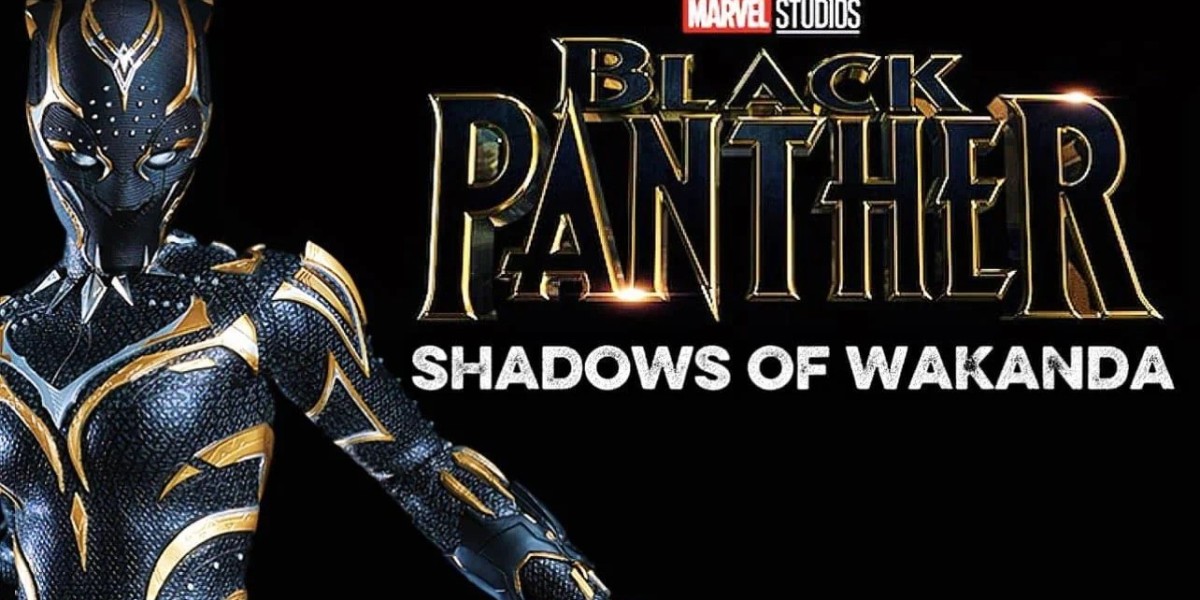
The release date was set: December 15, 2028. The title, for now, remains simply Black Panther 3, stylized with Roman numerals, a nod to lineage and continuity. But the subtext was clear: this is T’Challa II’s story.
The Boy Who Was Always Meant to Be King
Toussaint—whose American name is T’Challa II—first appeared in the post-credits scene of Black Panther: Wakanda Forever in 2022, a young boy played by Divine Love Konadu-Sun, revealed to be the secret son of T’Challa and Nakia. The revelation was a narrative masterstroke, born of necessity and grace. After Chadwick Boseman’s tragic death in 2020, Marvel faced an impossible choice: recast a role that had become inseparable from the man, or find a way to honor both the character and the actor.
They chose the latter. Wakanda Forever became a meditation on grief, with Angela Bassett’s Queen Ramonda and Letitia Wright’s Shuri carrying the emotional weight. Shuri took up the mantle of the Panther, but the final scene offered a different kind of hope: a child, hidden away in Haiti, living outside the pressures of the throne, but destined, nonetheless, to inherit it.
That child is now a man. And in the logic of superhero cinema, where time is elastic and aging is often ignored, Jonsson’s T’Challa II is the natural next step. He is not a replacement. He is a continuation. A prince who has come of age, ready to step into the role his father once held.
David Jonsson: The Heir Apparent
Jonsson is not a household name—not yet. But his résumé suggests an actor built for gravitas. In Industry, he played a ambitious outsider navigating the brutal world of finance. In The Long Walk, he carried the weight of a dystopian nightmare. In Alien: Romulus, he faced down xenomorphs with a quiet intensity.
He is, by all accounts, a performer who thrives in the spaces between dialogue, where emotion simmers beneath the surface. It’s a quality that serves T’Challa well. The original Black Panther was a king first, a superhero second. His power was not just in the suit or the claws, but in the way he carried himself—with dignity, with purpose, with the weight of a nation on his shoulders.
Jonsson will be 35 by the time Black Panther 3 hits theaters. Old enough to embody the authority of a king, young enough to grow into the role over multiple films. He is, in many ways, the perfect bridge between the past and the future.
The Legacy of Chadwick Boseman
The decision to pass the mantle to T’Challa’s son, rather than recast Boseman, was always going to be delicate. Boseman’s T’Challa was more than a character. He was a cultural phenomenon, a symbol of black excellence, of Afrofuturism, of a world where blackness was not a limitation but a source of power.
To recast him would have been to risk erasing that legacy. To ignore him would have been to deny the future. The solution—introducing his son—was elegant. It allowed Marvel to honor Boseman’s contribution while still moving the story forward.
In Wakanda Forever, the film went out of its way to acknowledge Boseman’s absence, with a prologue that felt like a eulogy. The story was about grief, about how a nation and a family move forward after loss. T’Challa’s death was not glossed over. It was the emotional core of the film.
Now, with his son stepping into the role, the narrative becomes about legacy. About what it means to inherit a throne, a title, a responsibility. It’s a story that resonates beyond the MCU. It’s a story about succession, about the weight of expectation, about the pressure of living up to a legend.
The Future of Wakanda
With Shuri still active in the MCU—she’s set to appear in Avengers: Doomsday this December—the question arises: what happens to the mantle of the Black Panther? Does Shuri continue as the Panther, or does she pass it to T’Challa II? The answer, likely, is both. Shuri has proven herself a worthy successor, a brilliant mind and a fierce warrior. But the throne, the title, the symbolic weight of the Black Panther—it belongs to the king.
The dynamic between Shuri and T’Challa II will be one of the most compelling aspects of Black Panther 3. She is his aunt, his mentor, perhaps even his rival. She has worn the suit, fought the battles, carried the burden. Now, she must step aside and let the prince take his place.
It’s a transition that mirrors real-world succession. Think of Prince William and King Charles. The heir apparent, waiting in the wings, ready to step into a role that has been defined by another. The tension, the respect, the weight of history—it’s all there. And it’s fertile ground for storytelling.
The Broader MCU Implications
The introduction of T’Challa II is not just about Wakanda. It’s about the MCU as a whole. The franchise is in a period of transition. The Infinity Saga is over. The Multiverse Saga is in full swing, but it’s still searching for its emotional core.
T’Challa II offers that core. He is a character with built-in legacy, with emotional resonance, with a story that is both personal and epic. He is a king, a superhero, a son. He is the future of the MCU, wrapped in the past.
His introduction also signals a shift in Marvel’s approach to succession. Rather than recasting or rebooting, they are choosing to pass the mantle. It’s a more respectful, more nuanced approach. It acknowledges the weight of history while still allowing for growth.
It’s a model that could be applied elsewhere. What if, instead of recasting Iron Man, we saw Tony Stark’s daughter take up the mantle? What if, instead of replacing Captain America, we saw Sam Wilson’s successor step into the role? The possibilities are endless.
The Cultural Impact
The Black Panther franchise has always been more than just a superhero movie. It’s a cultural phenomenon. The first film was a celebration of blackness, of African culture, of a world where black people were not marginalized but central.
Wakanda Forever was a meditation on grief, on how a community moves forward after loss. It was a film that resonated with anyone who has ever lost someone, who has ever had to find a way to keep going.
Now, with T’Challa II, the story becomes about legacy, about the future. It’s a story that resonates with anyone who has ever had to step into a role defined by another. It’s a story about growth, about responsibility, about the weight of expectation.
It’s a story that will resonate with a new generation. A generation that grew up with T’Challa, that saw him as a hero, as a king, as a symbol. Now, they will see his son, his heir, his legacy. They will see themselves in him.
The Road Ahead
Black Panther 3 is still two years away. Two years is a long time in the MCU. Plans change. Stories evolve. But the foundation is there. The legacy is there. The future is there.
With Ryan Coogler back at the helm, with Letitia Wright and Winston Duke returning, with David Jonsson stepping into the role of T’Challa II, the future of Wakanda is in good hands.
It’s a future that honors the past while still looking forward. A future that respects the legacy of Chadwick Boseman while still allowing for growth. A future that is both personal and epic, both intimate and grand.
In the end, that’s what the MCU is all about. It’s about legacy. It’s about growth. It’s about the future. And with T’Challa II, that future looks bright.
The Prince’s Burden
There is a scene in Wakanda Forever where Nakia, speaking of her son, says, “He will never know the pressure of the throne.” It was a line that spoke to T’Challa’s desire to protect his child, to give him a life free from the weight of expectation. [
But the throne, in the end, is inescapable. It is destiny. It is legacy. It is the weight of history.
And now, T’Challa II must bear that weight. He must step into the role his father once held. He must become the Black Panther.
It is a burden, yes. But it is also an honor. A privilege. A responsibility.
And in the hands of David Jonsson, it is a story worth telling.
The Legacy Continues
The introduction of T’Challa II at Comic-Con was more than just a casting announcement. It was a statement. A declaration. A promise.
It was a promise that the legacy of Chadwick Boseman would continue. That the story of Wakanda would go on. That the Black Panther would rise again.
It was a statement that the MCU is not afraid of change. That it is willing to evolve. That it is willing to look forward while still honoring the past.
And it was a declaration that the future of the MCU is in good hands. That the next generation of heroes is ready to step into the spotlight. That the story is far from over.
In the end, that’s what the MCU is all about. It’s about legacy. It’s about growth. It’s about the future. And with T’Challa II, that future looks bright.
The prince has returned. The king is dead. Long live the king.