.png)
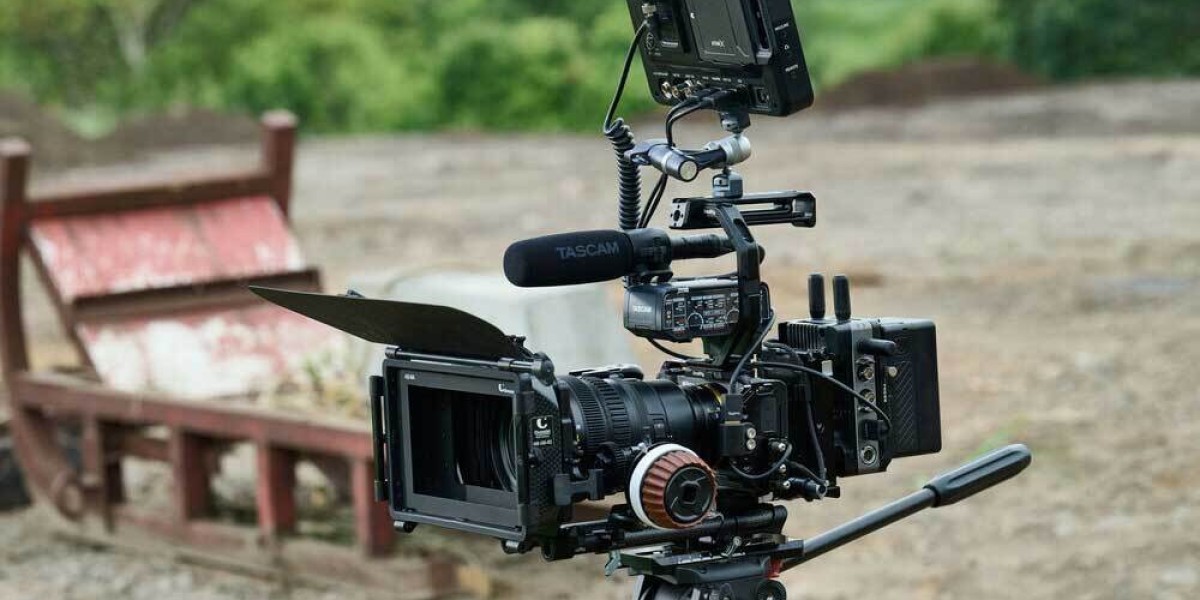

Three cameras sit at the center of the 2026 indie–cinema universe: Sony’s FX30, Blackmagic’s Cinema Camera 6K Full Frame, and Canon’s EOS C70—a trio that has quietly redrawn the line between “content creator” and “filmmaker.” They live in that mid‑level price band that doesn’t bankrupt you, yet somehow delivers images that wouldn’t look out of place in a streaming original, a brand film, or a music video with aspirations beyond YouTube.
The new middle class of cinema
Once upon a time, “mid‑level” cinema gear was a euphemism for compromise: smaller sensors, awkward ergonomics, codecs that cracked under a heavy grade, and audio that needed an entire suitcase of adapters. In 2026, the middle of the market feels suspiciously like the top—only without the rental houses, the six‑figure insurance policies, or the production manager asking if the ARRI is “really necessary” for a three‑minute spot.
Mid‑level, in this moment, means cameras in the roughly $1,500 to $6,000 range that offer 10‑bit color, honest dynamic range, and enough I/O—XLRs, timecode, clean HDMI or SDI—to function on a real set instead of just a desk with RGB lights. It means you can shoot an interview in the morning, a brand film in the afternoon, and a music video all weekend without staring at your waveform monitor in existential dread.
That democratization has pulled an entire generation of filmmakers into the orbit of three very different philosophies of image‑making: Sony’s relentless practicality, Blackmagic’s dreamy full‑frame romanticism, and Canon’s quiet confidence that the future still looks a lot like broadcast.
Sony FX30: the street‑smart prodigy
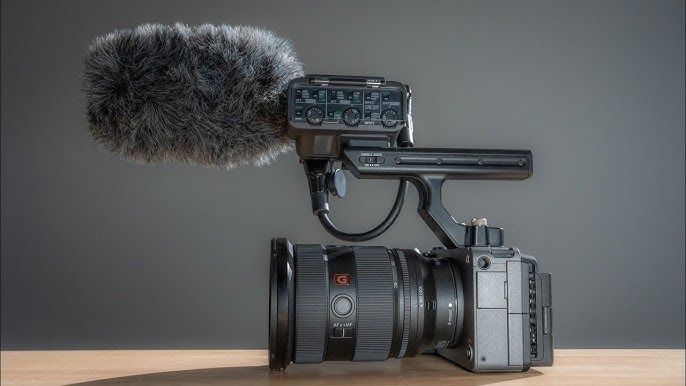
If the mid‑level market had an overachieving younger sibling—the kid who shows up to set early, remembers everyone’s coffee order, and somehow pulls focus while running audio—it would be the Sony FX30. Officially, Sony calls it a “budget cinema camera,” but the phrase undersells what it actually is: a weaponized APS‑C box aimed squarely at filmmakers who live in that liminal space between YouTube and the festival circuit.
Under the hood, the FX30 is built around an oversampled 6K sensor delivering 4K images with the kind of clarity and noise performance you used to associate with bigger, more expensive bodies. It records in 10‑bit 4:2:2, speaks log fluently, and now, thanks to firmware updates, even understands shutter angle—one of those subtle, workflow‑centric niceties that make cinematographers feel seen.
What makes the FX30 genuinely transformative isn’t just the spec sheet; it’s the way it collapses roles. A solo shooter can hand‑hold this thing, lean on the autofocus like a trusted AC, and still record professional audio via the XLR top handle without a sound cart in sight. The body seems designed not for the traditional hierarchy of a film set, but for a crew of one or two humans who spend as much time sprinting between locations as they do looking at lighting diagrams.
It’s the camera you bring when you have to shoot an interview in a co‑working space, a product demo in a warehouse, and a cinematic B‑roll montage at golden hour—all on the same production day. In that sense, the FX30 functions as a bridge: between mirrorless hybrids and true cinema rigs, between gear that was “good enough” and gear that actually respects the footage you’re trying to make.
Blackmagic Cinema Camera 6K Full Frame: the romantic
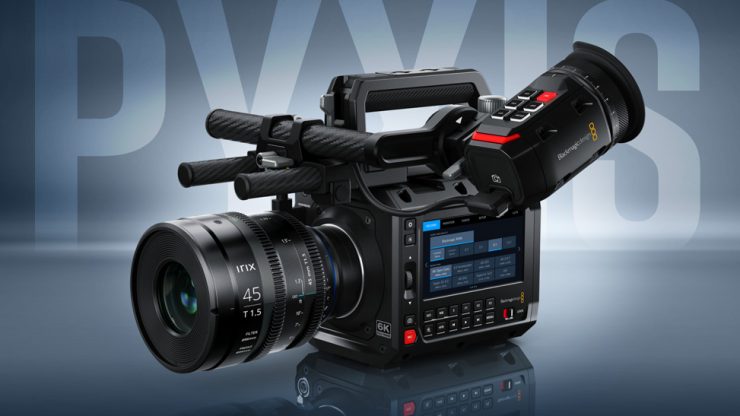
If the FX30 is the practical prodigy, Blackmagic’s Cinema Camera 6K Full Frame is the unapologetic romantic—the camera for people who think in gradients of shadow detail, skin tone nuance, and the way neon signs fall off into the night. Blackmagic has been quietly tugging at the edges of the cinema space for over a decade, but the jump to full frame in this model is less an incremental upgrade than a declaration of intent.
The sensor—36 x 24 millimeters, essentially the digital echo of 35mm film—changes everything from lens behavior to how cramped apartments and dim bars suddenly feel shootable. Where previous Super 35 Blackmagic bodies already flirted with cinematic depth of field, the full‑frame 6K makes that conversation explicit: bigger pixels, more light, more latitude in the inevitable low‑light scene you thought you’d have time to pre‑light.
The camera records Blackmagic RAW internally, which is both a statement of confidence and a kind of quiet challenge: if you’re going to wield this level of latitude, you’d better be ready to live inside DaVinci Resolve. Color science has long been Blackmagic’s love language, and the Cinema Camera 6K leans into that heritage—a palette that feels at home in narrative work, music videos, and brand pieces that want to look like films rather than campaigns.
Of course, romance has terms and conditions. The body is chunkier than your average mirrorless; battery life is honest but not generous; there are no built‑in NDs, and autofocus remains more a courtesy than a co‑pilot. But in exchange, you get something rare in this price bracket: an image that doesn’t feel like “mirrorless with ambitions,” but cinema with a smaller line item on the budget.
For independent filmmakers operating in tight spaces—both literally and financially—the BMCC 6K Full Frame does something quietly radical. It gives them an image that can stand next to much more expensive cameras without apology, as long as they’re willing to invest in the workflow: fast media, deliberate lighting, a grading pipeline that treats footage as a narrative instrument, not a thumbnail generator.
Canon EOS C70: the dependable adult in the room
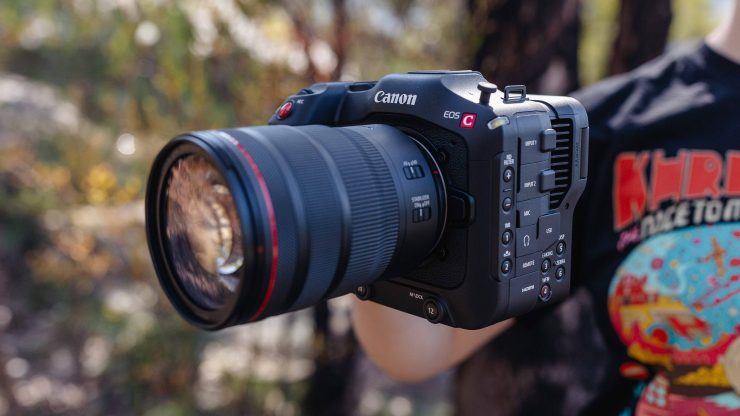
In a market obsessed with feeds, firmware, and the next big sensor, Canon’s EOS C70 feels like a camera designed by someone who still believes in the concept of a production calendar. It doesn’t scream for attention; it quietly turns up on sets where “We’ll fix it in post” is considered a moral failing rather than a workflow.
Canon built the C70 around a Super 35 4K sensor with Dual Gain Output technology, effectively splitting the difference between clean shadows and highlight retention. The result is an image that, while less spec‑driven than some competitors, has a reassuring familiarity—a look that feels equally natural in a corporate boardroom, a live event, or an overcast doc interview on the edge of town.
The camera’s charm is rooted in pragmatism. It has built‑in ND filters, XLR audio, and a body shape that wants to be held for hours rather than flexed for a thumbnail. The RF mount opens the door to Canon’s growing lens ecosystem, but the camera feels just as comfortable with vintage glass or cinema primes, as if it’s spent years observing what cinematographers actually do rather than what marketing departments wish they did.
Where the FX30 leans toward the agile creator and the BMCC 6K toward the cinematic artisan, the C70 speaks to producers who must answer emails about deliverables. It’s the mid‑level camera you hand to a shooter when the client’s expectations are high, the schedule is compressed, and the footage needs to go into an edit bay that may or may not be optimized for RAW.
In other words: the EOS C70 is less a camera for experiments than for obligations—and in professional filmmaking, obligations are often where reputations are made.
Three cameras, three ways to be a filmmaker
In the mid‑level cinema diaspora of 2026, choosing between the FX30, BMCC 6K Full Frame, and EOS C70 is less about “best” and more about identity. Each of these cameras imagines a different kind of working life, a different relationship between the gear, the story, and the person responsible for both.
The FX30 imagines you moving fast: traveling light, trusting autofocus, recording sound through a top handle, uploading behind‑the‑scenes clips between takes. It’s a camera for filmmakers who exist in perpetual motion—shifting between doc, branded content, and social cinema without pausing to ask which lane they belong in.
The BMCC 6K Full Frame imagines you obsessing over latitude: staying up too late in Resolve, tweaking skin tones, comparing LUTs like a sommelier, composing frames whose drama lives in the interplay between window light and practicals. It is indifferent to how quickly you post, but passionately concerned with how your footage will look on the big screen, or at least a projector pulled out for a small but dedicated audience.
The EOS C70 imagines you making days: negotiating shot lists, rolling on interviews with minimal fuss, handing off footage that editors will thank you for. It believes in reliability as an aesthetic choice, in the idea that consistency, clean audio, and built‑in ND filters are just as cinematic as shallow depth of field.
The invisible luxury: workflow
Vanity Fair pieces often pivot, at some point, away from surface toward infrastructure—the thing beneath the thing. In the world of mid‑level cinema, that infrastructure is workflow: codecs, media, color pipelines, and the fragile ecosystem of drives, editors, and delivery specs that determine whether a project endures beyond the export.
Sony’s FX30 is built for the contemporary hustle: 10‑bit files that most editing machines can digest without protest, proxy‑friendly workflows, and color profiles tailored to creators who grade, but not necessarily with the zeal of a DI suite. Plug, ingest, cut, deliver—it’s a camera that respects the fact that your footage is often just one line item in a wider content apparatus.
Blackmagic’s Cinema Camera 6K Full Frame, by contrast, assumes a certain level of devotion. Blackmagic RAW is efficient, yes, but it shines brightest when treated as a negative, not a file—something you sculpt with Resolve’s tools rather than flatten with a quick LUT and send on its way. This is a camera for filmmakers willing to accept that the luxury of cinematic latitude comes with obligations in the post‑production trenches.
Canon’s EOS C70 occupies a middle ground. Its files are friendly to broadcast workflows, its ergonomics clearly informed by decades of ENG and doc practice, and its design feels geared toward teams—DPs, producers, editors—who need footage to move through a pipeline without drama. The camera doesn’t insist you overhaul your workflow; it simply asks that you honor the footage with a clean grade and a proper sound mix.
The quiet revolution on set
The real story behind these mid‑level cinema cameras—and the reason they merit a long, Vanity Fair‑style consideration—isn’t that they’re cheaper, smaller, or packed with spec. It’s that they have shifted the cultural center of filmmaking away from the top of the market.
Independent filmmakers no longer have to treat “real cinema” as a distant aspiration, refracted through rental houses and gear tests. The FX30, BMCC 6K Full Frame, and EOS C70 give them the tools to make images that, for most audiences, are indistinguishable from much higher‑end productions—if the storytelling is confident enough to match.
In practical terms, this means more crews with fewer people, more narrative work produced outside traditional funding structures, more brands commissioning projects that look like short films because the tools to make them no longer require a studio’s gear closet. It means that a filmmaker attending a festival screening is less likely to ask, “What did you shoot on?” and more likely to ask, “How did you pull off that location?”—a small, but telling, shift of curiosity from hardware to craft.
Perhaps the most quietly radical aspect of this mid‑level revolution is that it has made failure affordable. These cameras are good enough that you can attempt ambitious projects—experimental narratives, doc hybrids, branded films that refuse to look like ads—without needing a grant, a sponsor, or a line of credit that outlives the project itself. When failure costs less, experimentation increases; when experimentation increases, new visual languages emerge.
Choosing your weapon in 2026
For a working filmmaker or digital creator weighing their next camera purchase, the question is no longer “Can this camera make cinematic images?” All three of these bodies have proven, in countless reviews and field tests, that they can. The more urgent question is: “Which version of my working life do I want to invest in?”
Choose the Sony FX30 if your reality revolves around speed, versatility, and the need to bridge worlds—commercial work, doc assignments, and platforms that reward consistent output as much as artistic ambition. It will protect your schedule as fiercely as your highlights.
Choose the Blackmagic Cinema Camera 6K Full Frame if you’re ready to build a workflow around cinematic latitude, if your heart beats faster in a color suite than in a gear forum, and if you believe that the romance of full‑frame storytelling is worth the discipline it demands.
Choose the Canon EOS C70 if your days are measured in call sheets and deliverables, if clients expect reliability more than novelty, and if your idea of cinema includes the steady, unobtrusive craft of keeping productions on time and footage on spec.
The mid‑level cinema camera in 2026 is no longer the consolation prize; it is the default—a new, quietly glamorous middle class of tools that let filmmakers chase stories rather than specs. And in true Vanity Fair fashion, the most interesting drama isn’t in the gear itself, but in the people deciding, in studio apartments and rented locations, which version of themselves they want that gear to enable.