.png)
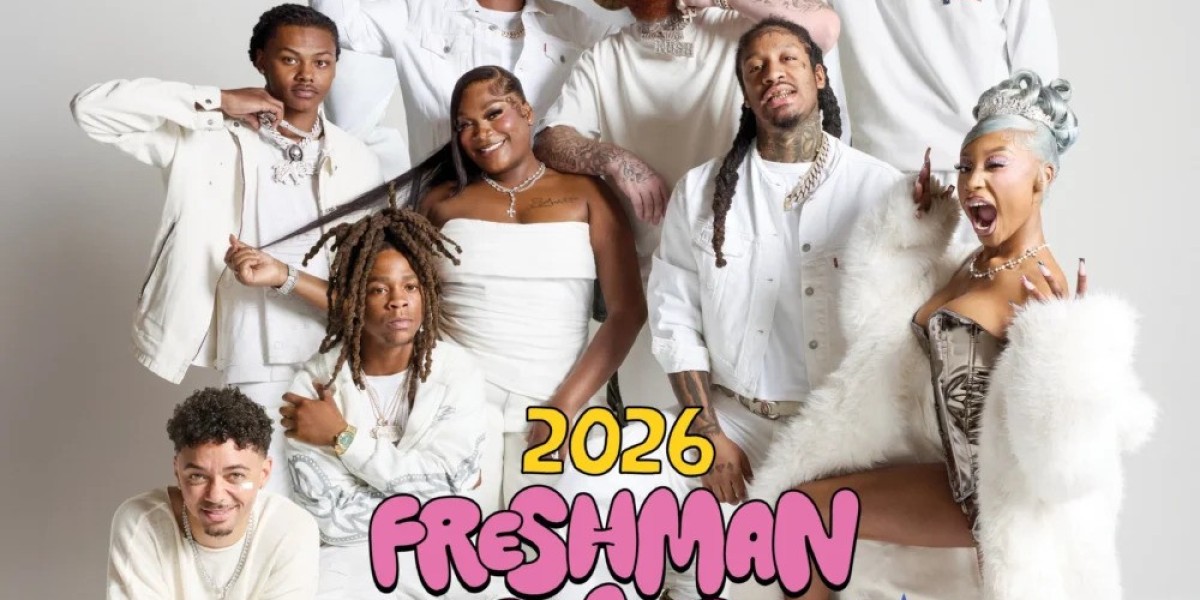

Once upon a time, the XXL Freshman cover was a coronation. It didn’t just introduce artists; it anointed them. You didn’t have to ask who these people were—because you already knew. Or at the very least, you’d heard the noise. The buzz wasn’t manufactured; it was unavoidable. It leaked out of car windows at red lights, rattled apartment walls, dominated mixtape circuits, and forced its way into your consciousness whether you liked it or not.
Now? The 2026 class drops, and the prevailing reaction is not debate, not excitement, not even outrage—it’s confusion.
Who are these people?
That question isn’t a dismissal. It’s a genuine inquiry. And perhaps more troubling than the anonymity itself is the absence of any sense that you’ve missed something. No lingering suspicion that maybe you’re just out of touch. No quiet admission that the youth have moved on without you. Instead, there’s a hollow certainty: this isn’t about being behind—it’s about something being off.
Because in an era where everything is measurable, trackable, and endlessly streamed, we’ve somehow lost the most important metric of all: awareness.
Streams Don’t Make You Famous
The modern music industry has mastered the art of the number. Monthly listeners, Spotify placements, algorithmic boosts—these have become the new gold plaques. But streams are a passive currency. They don’t require engagement, loyalty, or even recognition. A song can rack up millions of plays while remaining completely anonymous to the listener.
Think about that.
Music has become background noise for productivity playlists, gym sessions, late-night scrolling. Songs aren’t discovered; they’re served. And when something is served often enough, it accumulates numbers. But numbers are not the same as impact.
The artists on this year’s XXL list appear to be beneficiaries of this system—a system that rewards volume over visibility. They exist in the data, but not in the culture.
You can’t quote their lyrics. You can’t recall a defining moment. You can’t point to a track that shifted the conversation. And most damning of all: you don’t hear them outside of curated spaces. Not in the streets, not in clubs, not in the organic chaos where real hits are born.
So again: who is listening?
The Invisible Audience
There is, clearly, an audience. There must be. These artists didn’t materialize out of thin air. Their numbers—impressive on paper—suggest a listenership that is both vast and curiously silent.
But this audience doesn’t behave like audiences used to. They don’t champion artists; they consume them. They don’t build movements; they follow algorithms. Their engagement is fleeting, transactional, and largely invisible.
It’s the difference between hearing a song and knowing it.
And if no one truly knows the music, can we still call it popular?
This is the paradox of 2026: we are more connected than ever, yet cultural consensus has all but disappeared. There is no monoculture, no shared soundtrack. Instead, there are millions of micro-audiences, each fed a steady diet of content tailored to their habits—and isolated from everyone else.
The result is a fractured landscape where an artist can be “huge” in one digital pocket and completely nonexistent in another.
The XXL list, once a reflection of undeniable momentum, now feels like a snapshot of these fragmented ecosystems. It doesn’t represent the culture at large; it represents a collection of algorithmic success stories.
And that’s not the same thing.
Where Are the Hits?
Ask anyone to name a defining track from this year’s class, and you’ll likely be met with hesitation. Not because the music doesn’t exist—but because none of it has broken through.
There is no “Paid in Full.” No “One More Chance.” No “Brenda’s Got a Baby.” No “Meet Me at the Crossroads.”
Those weren’t just songs; they were moments. They carried narratives, emotion, identity. They demanded attention. They lingered.
Today’s output, by contrast, often feels interchangeable. A blur of similar cadences, similar production, similar aesthetics. The rise of what critics have lazily dubbed “mumble rap” has evolved into something even more indistinct—a kind of sonic wallpaper that fills space without defining it.
It’s not that talent is absent. It’s that distinction is.
Artists are emerging into a system that incentivizes consistency over creativity. Why take risks when the algorithm rewards familiarity? Why craft a standout record when a steady stream of mid-level content can generate reliable numbers?
The consequence is a landscape devoid of peaks. Everything exists on the same plateau.
And without peaks, there are no stars.
The Industry Machine
It’s tempting to believe that the XXL list is still a meritocracy—that these artists earned their place through undeniable buzz and organic growth. But the reality is more complicated.
The modern music industry is a labyrinth of label politics, playlist placements, and strategic marketing. Visibility is no longer something that happens; it’s something that is engineered.
This doesn’t necessarily mean there’s a “fix” in the conspiratorial sense. But it does suggest a system where certain artists are elevated not because they’ve captured the public imagination, but because they fit the current mold.
They are safe bets. Predictable outcomes. Easily digestible products.
And in a business increasingly driven by data, predictability is king.
The XXL list, then, becomes less about identifying future icons and more about reinforcing existing industry pipelines. It’s a feedback loop: artists gain exposure because they’re selected, and they’re selected because they’ve been positioned for exposure.
But exposure without impact is just noise.
The Disappearance of Risk
One of the most striking differences between past and present is the absence of risk.
The artists who defined previous eras weren’t just successful—they were disruptive. They challenged norms, introduced new sounds, and forced the industry to adapt.
Today’s freshmen, by contrast, often feel like iterations rather than innovations.
Part of this is structural. The stakes are higher, the margins tighter, the competition relentless. Labels are less willing to gamble on unproven ideas when the algorithm provides a clear roadmap to moderate success.
But part of it is cultural. The internet has accelerated trends to the point where originality is fleeting. By the time a new sound gains traction, it has already been replicated, diluted, and commodified.
What remains is a cycle of imitation.
And imitation, no matter how polished, rarely leaves a lasting impression.
A Crisis of Recognition
At its core, the unease surrounding the 2026 XXL Freshman List is not just about the artists—it’s about recognition.
Fame used to mean something. It implied a level of ubiquity, a shared understanding that this person, this voice, mattered in a broader context.
Now, fame is fragmented. It exists in pockets, measured in metrics that don’t translate to real-world awareness.
You can be “big” and still be unknown.
And that’s a problem.
Because music, at its best, is a communal experience. It connects people, creates memories, defines moments. When that sense of shared recognition disappears, something fundamental is lost.
The XXL list used to capture that feeling. It was a snapshot of who was about to take over the world—or already had.
Now, it feels like a list of who might perform well in a system that no longer produces true stars.
So Where Do We Go From Here?
It’s easy to dismiss the current state of affairs as a decline—a fall from a golden age that can never be replicated. But that perspective, while comforting, is also incomplete.
The culture hasn’t disappeared. It has dispersed.
There are still artists creating meaningful, memorable work. There are still songs that resonate, that endure. But they are harder to find, buried beneath an avalanche of content.
The challenge is no longer access—it’s curation.
Perhaps the real question isn’t why these artists are on the XXL list, but why the artists who feel more impactful are not.
Who decides what matters?
And more importantly, who is paying attention?
Because somewhere, someone is listening. The numbers prove that. The system depends on it.
But until that listening translates into recognition—into moments, into memories, into music that refuses to fade into the background—the disconnect will persist.
The XXL Freshman List will continue to drop.
And we will continue to ask the same question.
Who are these people?