.png)
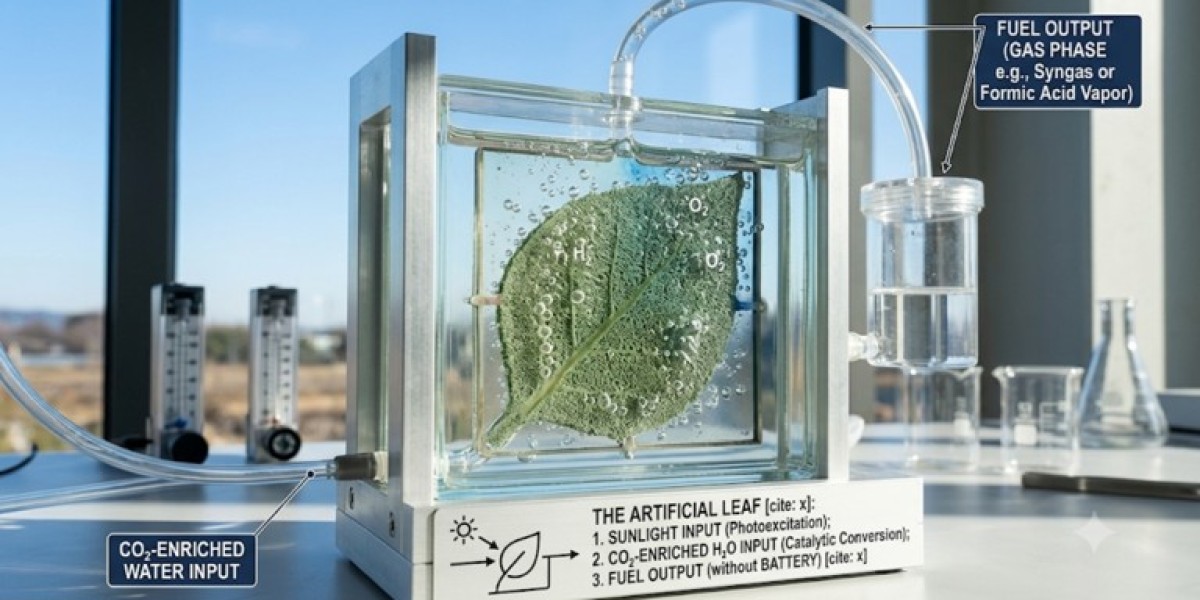

It is July of 2026, and the world is, quite literally, boiling. From the sweltering, unyielding pavement of the Acela corridor to the historic heatstroke alerts currently paralyzing Tokyo, the atmosphere feels less like a weather pattern and more like a consequence. The climate crisis is no longer a looming, abstract threat reserved for the closing remarks of philanthropic galas; it is the oppressive, inescapable reality of our daily commute.
For the past decade, the global response to this existential dread has been defined by a distinctly human brand of brute-force hubris. We have attempted to engineer our way out of a planetary fever with massive, sprawling industrial complexes. We have constructed vast lithium-ion battery farms that require the aggressive, earth-scarring mining of rare minerals. We have tasked artificial intelligence—housed in data centers that drink millions of gallons of fresh water—to optimize our power grids. The prevailing doctrine of the Silicon Valley elite has been that salvation will arrive via software, complex circuitry, and an endless array of microchips.
Yet, as the tech billionaires loudly debate the merits of localized nuclear fusion and orbital solar arrays, the most profound breakthrough of the year has arrived with the quiet, unassuming elegance of a houseplant.
Outside your window, for over a billion years, the humble leaf has been performing a miracle that human engineering is only just beginning to grasp. It catches sunlight, absorbs carbon dioxide and water, and seamlessly converts it into stored chemical energy. It does this without a single line of code, without a motherboard, and without a lithium battery. It is the ultimate masterclass in passive, localized energy production. And finally, after decades of arduous laboratory trials, humanity is learning how to properly plagiarize it.
In mid-June of this year, a stunning revelation emerged from the laboratories of the Research Center for Artificial Photosynthesis at Osaka Metropolitan University. A team of scientists, led by Associate Professor Yasuo Matsubara and Professor Yutaka Amao, in collaboration with Iida Group Holdings, published a paper in the Royal Society of Chemistry journal EES Solar (DOI: 10.1039/D5EL00177C) that fundamentally disrupts our current clean-energy paradigm. They have successfully built a compact, battery-free artificial photosynthesis reactor that turns sunlight, water, and carbon dioxide directly into liquid fuel.
To understand the sheer magnitude of this achievement, one must first understand the historical stumbling blocks of solar fuel technology. The concept of artificial photosynthesis is not entirely new. The ambition to "bottle sunshine" has seduced chemists for decades. The problem, historically, has been the capriciousness of the sun. Clouds roll in, shadows lengthen, and the intensity of solar radiation wildly fluctuates.
To compensate for this, traditional artificial photosynthesis devices have relied on a technological crutch known as Maximum Power Point Tracking (MPPT). MPPT requires a complicated suite of electronics, sensors, and, crucially, a battery to regulate the electrical current and ensure the chemical reaction remains stable as the sunlight varies. It was a solution born of the computer age: when faced with a problem, add a microchip. But these electronic appendages made the devices bulky, expensive to manufacture, and prone to mechanical failure.
The brilliance of the Osaka team lies not in what they added to the device, but in what they had the audacity to subtract. They have entirely eliminated the electronic MPPT system and the battery.
Instead, they designed a self-regulating solid electrolyte. It operates on a principle of physics and chemistry so poetic it borders on art. When the sun beats down with intense, blistering heat, the device naturally warms up. As the temperature of the solid electrolyte rises, its electrical resistance drops. This perfectly timed drop in resistance allows more electrical current to flow from the solar cell into the electrolyzer, automatically keeping the system operating at peak efficiency. When a cloud passes over and the temperature drops, the resistance increases, naturally throttling the current.
It is a machine that breathes with the sky. It regulates itself passively, using the innate thermal dynamics of its own materials rather than relying on a frantic, battery-powered algorithm. It is a stunning rebuke to the modern technological ethos that dictates every device must be "smart" or connected to the cloud. Sometimes, the smartest engineering is simply getting out of nature's way.
The product of this elegant alchemy is formic acid (HCOOH)—a clear, storable liquid fuel. Formic acid is a remarkable substance. It holds the captured solar energy securely within its chemical bonds, meaning it can be easily transported, stored in a tank for months without degrading, and utilized on demand. It represents the holy grail of renewable energy: a method of capturing the intermittent power of the sun and transforming it into a stable, physical commodity.
This is not merely a theoretical exercise confined to the sterile vacuum of a university laboratory. The Osaka researchers subjected their battery-free leaf to the brutal realities of the outdoors. Under real, wildly fluctuating atmospheric conditions, the device functioned flawlessly, churning out stable yields of formic acid as the sun ducked behind summer squalls.
For a glimpse into the tangible future this technology promises, one need only look back to the Osaka Kansai Expo 2025. There, long before the peer-reviewed paper made global headlines, the researchers quietly showcased an early iteration of their system. Sitting in the joint Iida Group pavilion, the battery-free artificial leaf steadily absorbed the ambient light, generating enough formic acid to entirely power a working miniature diorama for the mesmerized public. It was a charming, scale-model proof of concept that whispered of a radically decentralized future.
The geopolitical and cultural implications of this technology are staggering. For over a century, global power dynamics have been dictated by the geographical lottery of fossil fuels. The nations that sat atop vast reservoirs of prehistoric, liquefied carbon became the arbiters of the global economy. As we blindly rushed toward electrification in the early 2020s, we simply traded one geographical dependency for another, pivoting our reliance from the oil fields of the Middle East to the lithium and cobalt mines of the Global South.
Artificial photosynthesis offers an escape from this deeply entrenched paradigm. As the World Economic Forum has highlighted in its recent strategic outlooks, the push for artificial photosynthesis must be viewed as a modern, global "Apollo-like mission" (for an excellent visual primer on this global scientific mobilization, watch Nature's documentary feature, "Learning from leaves: Going green with artificial photosynthesis").
If the Osaka breakthrough can be successfully scaled up—and that remains the trillion-dollar question—the implications are democratizing on a breathtaking scale. Any nation, any city, and theoretically, any individual with access to sunlight, water, and atmospheric carbon dioxide could produce their own liquid fuel. It envisions a world where a suburban rooftop isn't just generating electricity to power a television, but is actively synthesizing a physical fuel to be stored in the garage for the winter. It is the ultimate decentralization of power, returning energy production to the local, almost artisanal level.
There are, inevitably, hurdles yet to be cleared. The transition from powering a miniature diorama to fueling a commercial jetliner or a residential heating grid requires a monumental leap in industrial scaling. The researchers themselves acknowledge that the long-term durability of the solid electrolyte over years of harsh, outdoor exposure remains an open question. The real-world economic cost of manufacturing these specialized passive materials must ultimately prove cheaper than the mass-produced electronics they are meant to replace.
But these are the ordinary, expected growing pains of a nascent revolution. They are engineering challenges, not fundamental violations of physics. What matters is the paradigm shift.
As we navigate the oppressive heat of this July, surrounded by the terrifying consequences of our two-century binge on fossilized carbon, the battery-free artificial leaf stands as a profound beacon of optimism. It forces us to reevaluate our relationship with the natural world. For generations, we viewed nature as something to be conquered, extracted, and outsmarted. We built loud, combustion-driven machines to dominate our environment, and when they poisoned the sky, we tried to build even larger, more complex machines to clean it up.
The Osaka Metropolitan University breakthrough suggests a different, more humbling path forward. It suggests that the answers to our most complex, apocalyptic crises might not lie in the arrogant complexity of Silicon Valley algorithms, but in the quiet, billion-year-old wisdom of biology. We are finally learning that we do not need to out-engineer the planet; we simply need to have the grace, and the scientific humility, to mimic it. The alchemy of the sun is no longer a mystery. It is a blueprint. And it just might save us all.