.png)
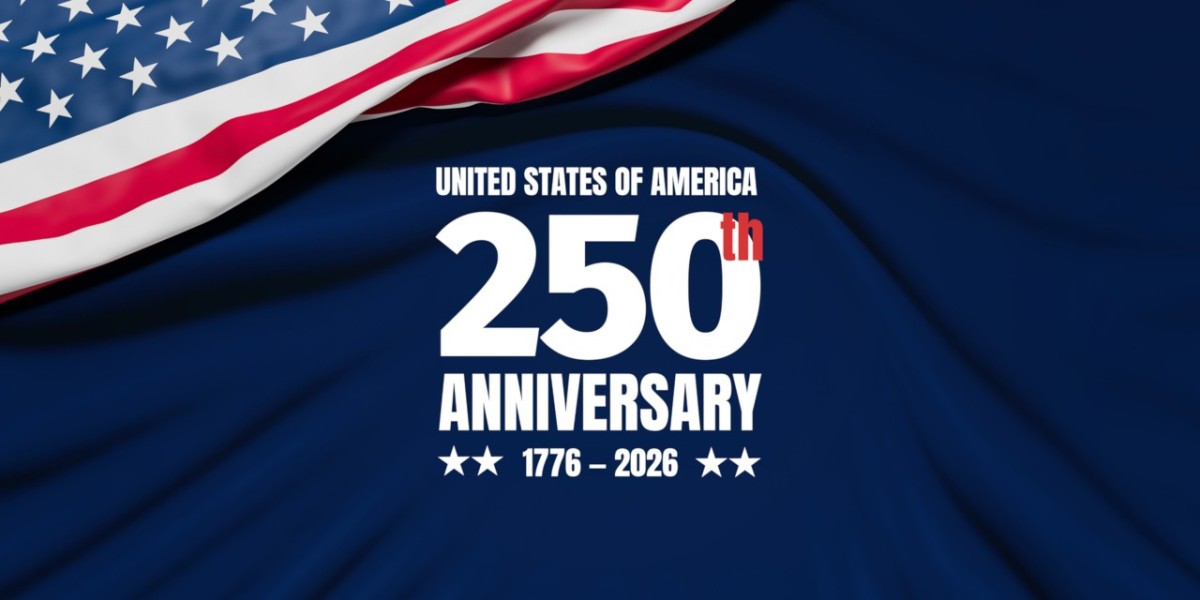

It is July in Washington, D.C., and the heat is doing that oppressive, Swamp-born thing where it feels less like weather and more like a physical assault. Down the Acela corridor, in Philadelphia, the air is thick with the scent of roasted nuts, historical cosplay, and an almost desperate manufactured unity. We are precisely three days away from July 4, 2026. The United States of America is turning 250 years old.
In the parlance of the official planners, this is the "Semiquincentennial." It is a word that requires an advanced degree in linguistics to pronounce and a certain level of bureaucratic numbness to take seriously. Yet, for the past decade, the non-partisan United States Semiquincentennial Commission—branded more palatably as America250—has been laboring under the Herculean mandate to orchestrate a birthday party for a nation that can currently barely agree on what century it is living in, let alone what its founding documents mean.
If the Bicentennial in 1976 was a bell-bottomed, post-Watergate sigh of relief—a desperate attempt to wash off the grime of Vietnam and Nixon with tall ships and fireworks—the Semiquincentennial is a masterclass in cognitive dissonance. As the nation readies the confetti for the grandest patriotic pageant of the 21st century, the reality beneath the red, white, and blue bunting is a political landscape defined by scorched-earth midterm elections, aggressive redistricting wars, and a geopolitical theater teetering on the edge.
To understand the sheer scale of the America250 effort, one must look at the itinerary of forced communal joy. According to the Commission, the mandate is to engage all 350 million Americans. There are plans for an "America's Potluck," intended to be a nationwide communal meal, and an "America's Block Party," pitched as the largest synchronized celebration in U.S. history. The U.S. Mint is circulating specially redesigned nickels, dimes, quarters, and half dollars, ensuring that even the spare change rattling in the pockets of the American electorate is appropriately festooned with commemorative zeal.
But this being America, the true celebration is happening where the money is. Up in the Hamptons, where the ocean breeze offers a reprieve from the D.C. inferno, the galas are in full swing. Entry to the most exclusive Semiquincentennial clambakes starts at a cool $10,000 a head, a sum quietly routed through super PACs and "social welfare" nonprofits. Here, coastal elites clink glasses of vintage Champagne, toasting the Founding Fathers while discussing how to financially maneuver around the looming expiration of Affordable Care Act subsidies. It is a portrait of Gilded Age extravagance, overlaid with a veneer of democratic piety.
The juxtaposition is jarring. As news analysts and market watchers point out, the 2026 economy remains a battleground of populist frustration. Tariffs are dominating the headlines, creating palpable anxiety about the rising cost of consumer goods. To the average citizen—the ones America250 is desperately trying to court with block parties and potlucks—the 250th anniversary feels less like a triumph and more like an elaborate distraction.
While the marching bands tune their instruments, the real action is happening in the windowless rooms of state legislatures across the country. The 2026 midterm elections are looming in November, and the battle for the House of Representatives has shifted from the campaign trail to the cartographer’s desk. Both the Republican and Democratic parties have engaged in a relentless, unforgiving war of redistricting.
In states like Texas, North Carolina, and Ohio, Republican legislatures have aggressively pursued new maps designed to squeeze every conceivable advantage out of the geography. In North Carolina, the contentious House Bill 958 is making its way through the zeitgeist, a piece of legislation that critics argue will install new administrative hurdles and shorter deadlines, effectively making voting harder for marginalized citizens. Meanwhile, Democrats are not taking this lying down. In California, Proposition 50 aims to fundamentally alter the state's political geography to eliminate safe Republican districts, while party operatives push for mid-decade redraws in Maryland and Virginia to counter the GOP’s maneuvers.
Gerrymandering has become the blood sport of the Semiquincentennial. The irony is as thick as the July humidity: a nation celebrating 250 years of representative democracy is simultaneously engaged in a systemic, highly sophisticated effort to ensure that as few competitive elections occur as legally possible. The Founding Fathers, who despised factions but designed a system that all but guaranteed them, would likely be both horrified and impressed by the sheer mathematical precision of modern political warfare.
And then, there is the shadow looming over the entire affair. You cannot discuss the political climate of 2026 without acknowledging the enduring, inescapable presence of Donald Trump. His particular brand of economic nationalism and assertive, often chaotic foreign policy continues to dictate the terms of engagement in Washington.
Trump’s influence on the Semiquincentennial is undeniable. The America250 kickoff events have heavily featured the former president, cementing his grip on the narrative of American greatness for a significant portion of the electorate (for a glimpse of this polarizing pageantry, one need only look to the official kickoff coverage: WATCH LIVE: America250's Kick-Off Celebration). To his supporters, the 250th anniversary is a validation of the "America First" doctrine—a moment to reclaim a nostalgic, muscular patriotism. To his detractors, the celebrations feel like a surreal masquerade, a patriotic gloss over what they view as a sustained assault on democratic norms in the lead up to the midterms.
This domestic turbulence is playing out against a backdrop of severe geopolitical instability. July 2026 has brought renewed, fragile negotiations with Iran in Doha, mediated by the Qataris, attempting to salvage some semblance of a nuclear agreement and a permanent truce following dangerous clashes in the Strait of Hormuz. Prime Minister Netanyahu of Israel has indicated a limited pullback in Lebanon, amidst reports that the US has heavily pressured Israel to avoid a broader regional conflagration. In Europe, Russia is grappling with a deepening fuel crisis, while the UN Climate Talks in Bonn have just collapsed in failure, casting a dark cloud over the upcoming COP 31 in Antalya.
The American empire at 250 is an anxious colossus. It is richer, more powerful, and technologically more advanced than George Washington could have possibly hallucinated in his wildest fever dreams at Valley Forge. Yet, it is also a nation that feels profoundly insecure about its place in the world and its promises to its own citizens.
Perhaps this is the true American tradition. We are a nation born in contradiction—a declaration of universal equality written by a man who enslaved hundreds, a republic built on stolen land, a beacon of hope that routinely falls short of its own mythology. The friction between our ideals and our reality has always been the engine of our history.
As the sun sets on July 4, 2026, millions of Americans will look up at the sky. From the National Mall to the backyards of the Midwest, millions of pounds of explosives will detonate in perfectly choreographed displays of fire and color. The fireworks are a fitting metaphor for the current state of the union: spectacular, expensive, deeply traditional, and inherently explosive.
For a few hours, the sky will be filled with light. The politicians will pause their redistricting algorithms. The cable news pundits will lower their voices. The nation will stand, however briefly, under a shared canopy of awe. But when the smoke clears and the last ember fades into the July night, the 250-year-old American experiment will wake up to the morning of July 5th. The potluck will be over. The midterm elections will be precisely four months away. And the hard, unglamorous work of keeping the republic will continue, as fractured and vital as ever.