.png)

There is a specific kind of electricity that hums through the canyons of Los Angeles and the humid, exhaust-choked streets of New York as June gives way to July. It is the hum of money being spent, of spectacles being launched, and of the cultural zeitgeist finally, mercifully, coalescing around a few undeniable titans. For the better part of a decade, the chattering classes have mourned the death of the monoculture. We were told that the internet had fractured our attention spans into a million irreconcilable niches, that we would never again have a shared water-cooler moment unless it involved a celebrity trial or a catastrophic geopolitical failure.
But look around this June of 2026. The algorithms have exhausted themselves. The endless, paralyzed scrolling through streaming queues has yielded to a primal, almost desperate hunger for the Event. We are, it seems, entirely finished with the small, the mid-budget, and the niche. The summer of 2026 is an exercise in unbridled, unapologetic maximalism. It is the season where the stars stopped pretending to be just like us, and instead decided to ascend the Mount Olympus of pure spectacle.
To understand the sheer scale of the cultural consumption currently underway, one need only look at the twin pop hegemonies dominating the global soundscape. On June 12th, Olivia Rodrigo released her third studio album, carrying a title so painfully, brilliantly Gen-Z that it loops back around to high art: You Seem Pretty Sad for a Girl So In Love. Rodrigo, who spent her late teens weaponizing adolescent heartbreak into multi-platinum angst, has transitioned seamlessly into the messy, existential ennui of her early twenties.
The album—anchored by the venomous and already-inescapable lead single “Drop Dead”—is less a collection of songs and more a generational manifesto. It’s the soundtrack for a demographic that has inherited a burning planet and a broken economy, yet still has to figure out what to text a boy who ghosted them on a Tuesday. As she prepares to embark on The Unraveled Tour (a sprawling, 86-date global crusade beginning this fall, supported by indie darlings like Wolf Alice and The Last Dinner Party), Rodrigo has cemented her status not just as a pop star, but as the poet laureate of female fury.
Yet, Rodrigo is not the only monarch holding court this summer. Ariana Grande’s return to the arena stage with the Eternal Sunshine Tour, which kicked off in a deluge of glittering choreography in Oakland on June 6th, offers a fascinating counter-programming. If Rodrigo is the raw, bleeding edge of youth, Grande is the ethereally matured stateswoman of pop. Anticipation for her eighth studio album, Petal, slated for a July 31st release, has reached a fever pitch. Grande has spent the last few years curating an aura of pristine, almost secretive mystique. Her concerts are no longer merely pop shows; they are mass secular pilgrimages, bathed in soft-focus lighting and executed with the precision of a military operation.
This insatiable public appetite for the massive and the communal is not confined to the music industry. It has bled across the cultural spectrum, infiltrating even the world of sports. The 2026 FIFA World Cup, currently unfurling across the United States, Canada, and Mexico, has transcended athletics to become a pop culture juggernaut of its own. When 18-year-old Spanish wunderkind Lamine Yamal made history on June 21st by scoring the opening goal against Saudi Arabia—becoming the youngest player to do so since Pelé in 1958—it wasn’t just a sports highlight; it was a global, synchronized gasp. It was proof that we still want to watch the same things, at the same time, and feel the same thrill.
But perhaps the most audacious manifestation of this return to the monolithic cultural event is looming just on the horizon, slated to hit theaters on July 17th. I am speaking, of course, of Christopher Nolan’s The Odyssey.
There is a running joke in Hollywood that Christopher Nolan is the only director left who could walk into a studio executive’s office, demand a blank check to film himself reading the phone book in 70mm, and walk out with $200 million. Following the staggering, atomic success of Oppenheimer, the industry waited with bated breath to see what the British auteur would tackle next. A James Bond film? A return to the cerebral sci-fi of Inception?
Instead, Nolan chose Homer.
The audacity of attempting to adapt the foundational text of Western literature is staggering. It is the kind of hubris that usually precedes a spectacular, career-defining flop. But Nolan, a director whose entire brand is built on cold, mechanical precision and overwhelming sensory immersion, seems singularly equipped to pull it off.
Let us examine the cast, which reads less like a call sheet and more like a summit of the Hollywood elite. Matt Damon steps into the sandals of Odysseus. On paper, it is a curious choice. Damon possesses an inherent, Bostonian practicality; he is the ultimate American everyman, the guy you want beside you in a trench or stranded on Mars. Can he embody the cunning, exhausted King of Ithaca, lost at sea for a decade? Early whispers suggest it is a stroke of casting genius. Nolan is reportedly leaning into the sheer, agonizing fatigue of the character—a man who is less a mythological hero and more a traumatized veteran desperate for his living room.
Opposite him is Anne Hathaway as Penelope. Hathaway, who has become one of Nolan’s most reliable cinematic muses, is tasked with carrying the emotional anchor of Ithaca. Penelope is a role that demands a delicate tightrope walk of stoicism and simmering, murderous rage as she fends off a horde of arrogant suitors. Tom Holland, still fiercely attempting to shed the sticky, web-fluid residue of the Marvel Cinematic Universe, plays their son, Telemachus. The supporting ensemble is a dizzying array of star power: Zendaya, Robert Pattinson, Charlize Theron, and, in a casting decision that has already launched a thousand bewildered think-pieces, rapper Travis Scott in a minor, yet-undisclosed role.
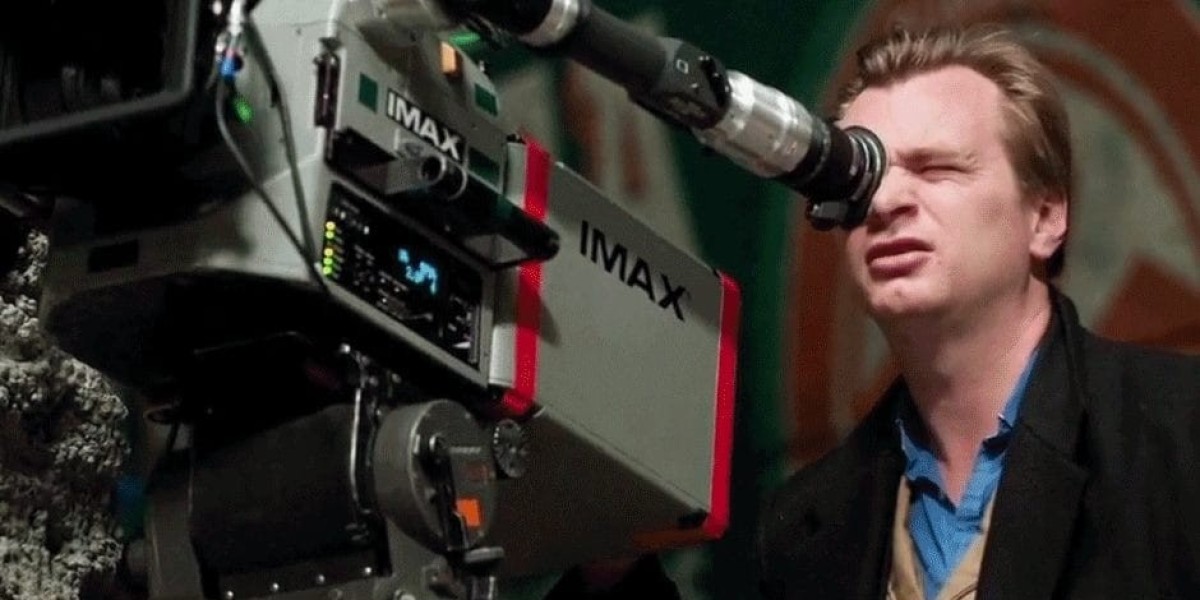
But the true star of The Odyssey, as is always the case with a Christopher Nolan picture, is the format. The film is making history as the first feature-length production to be shot entirely on IMAX 70mm film cameras.
To understand the logistical nightmare of this endeavor, one must understand the IMAX 70mm camera. It is not a nimble, lightweight digital sensor. It is a massive, groaning beast of a machine. It sounds like a chainsaw when it rolls. It requires film magazines that weigh as much as a golden retriever and hold barely three minutes of footage. Hauling these behemoths across the rugged landscapes of Iceland, the blistering sands of Morocco, and the treacherous coastlines of Italy over a grueling six-month shoot is an act of cinematic masochism.
While Nolan is pushing the boundaries of analog film, the rest of the industry is undergoing a seismic technological and corporate restructuring. Just weeks ago, the film production world was rocked by the quiet, yet monumental acquisition of ARRI—the gold standard of cinema cameras—by broadcast technology billionaire Thomas Riedel, as detailed in the June 2026 Film and Digital Times [5]. For nearly a century, ARRI has been the undisputed aristocratic lineage of Hollywood cameras. To shoot on an ARRI Alexa was to signal that your project was prestige; it was the cinematic equivalent of driving a Rolls-Royce.
Riedel’s acquisition is more than just a corporate merger; it is a symbol of the creeping, inescapable influence of live-broadcast technology and corporate streamlining into the sacred halls of cinema. The old guard of Hollywood purists is currently engaged in a quiet panic over martinis at the Polo Lounge. They whisper that the soul of cinematography is being sold to the highest bidder, that the art form is being reduced to a mere data stream. Meanwhile, companies like Sony are aggressively capitalizing on the disruption. Filings from China recently confirmed that Sony is targeting a pre-September release for the highly anticipated FX3 Mark II, a camera that promises to democratize high-end filmmaking even further [6]. You can view a thorough breakdown of these looming shifts in the digital cinema space via current trending tech analysis Watch: Camera Industry 2026 Forecast.
This technological arms race—between the analog purists like Nolan lugging 70mm cameras up mountains, and the digital innovators reshaping the economic realities of production—is the true, untold drama of Hollywood in 2026. It is a battle for the very aesthetic soul of the moving image.
Consider the machinery behind Ariana Grande’s Eternal Sunshine Tour. This is not merely a singer walking onto a stage with a microphone. It is a multi-million-dollar traveling metropolis. The logistics involved in erecting the tour’s stage design in a new city every three days are mind-boggling. It requires a fleet of semi-trucks, hundreds of technicians, and a supply chain that rivals a small nation's military. The pop star is no longer just an artist; she is the CEO of a multinational corporation whose primary export is euphoria.
Similarly, Olivia Rodrigo’s trajectory reflects a profound shift in how stardom is manufactured and sustained. The rollout for You Seem Pretty Sad for a Girl So In Love was a masterclass in controlled chaos. It bypassed the traditional media gatekeepers—no groveling late-night television interviews, no painstakingly negotiated magazine covers. Instead, it was a direct, intravenous injection into the cultural bloodstream via cryptic social media drops and guerrilla marketing campaigns. Rodrigo’s team understands that in 2026, you don't ask the culture for permission; you simply overwhelm it.
The convergence of Rodrigo’s stadium-shaking angst, Grande’s pop-diva liturgy, and Nolan’s 70mm mythological epic is not a coincidence. It is a course correction. For years, the tech industry—the Silicon Valley disruptors who convinced us that content was meant to be consumed on a six-inch screen while riding the subway—promised us a bespoke, hyper-personalized cultural diet. They gave us an endless buffet of "content," tailored to our microscopic preferences by opaque algorithms.
And it turned out, we hated it. Or, at the very least, we grew profoundly bored by it.
The isolation of the hyper-personalized feed left us starved for common ground. The magic of a true pop culture moment is not just in the art itself; it is in the knowledge that millions of other people are experiencing the exact same thrill, the exact same heartbreak, or the exact same awe at the exact same moment.
When you sit in a sold-out arena as Olivia Rodrigo screams the bridge of “Drop Dead,” or when you feel the bass of the IMAX sound system rattle your ribs as Odysseus's ship is battered by the wrath of Poseidon, you are participating in a communion. You are stepping out of your curated, algorithmic silo and rejoining the human race.
This, then, is the grand, glittering paradox of the 2026 Summer of Spectacle. We are witnessing the triumph of the analog, the communal, and the monumental, but it is entirely sustained by the most ruthless, hyper-efficient digital machinery ever created. We flock to see Nolan’s 70mm ode to ancient Greece, completely oblivious to the corporate warfare raging over the very cameras used to film it. We weep in stadiums alongside eighty thousand strangers, united by a pop song that was meticulously engineered by a boardroom to trigger precisely that reaction.
But perhaps that is too cynical a view for a Friday evening in June. When the lights go down—whether it is in the cavernous expanse of an IMAX theater or the humid twilight of an outdoor stadium—the corporate machinery fades away. The balance sheets, the acquisitions, the algorithmic strategies; none of it matters in the dark. What remains is the sheer, undeniable power of the spectacle. The monoculture has returned, not as a tyrant, but as a host throwing the most magnificent, expensive party the world has ever seen. We are all invited, and God help us, we are all having a marvelous time.