.png)
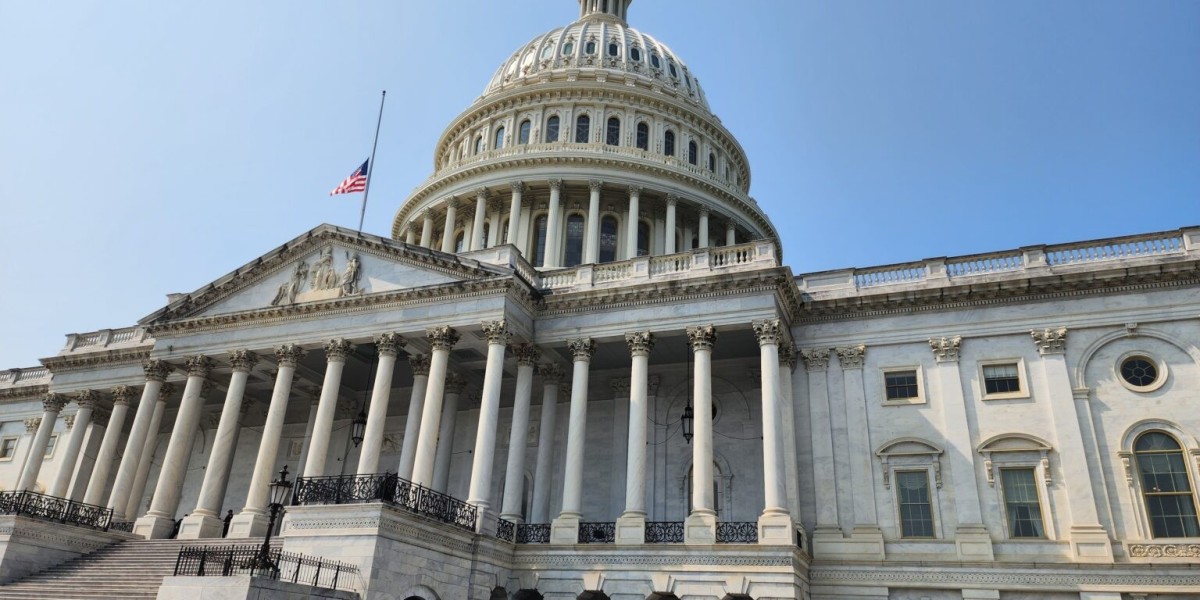

Washington, D.C., in June is a swamp in both the meteorological and the metaphysical sense. The air settles heavily over the Potomac, thick with a suffocating humidity that mirrors the unmistakable stench of political desperation lingering in the corridors of power. As the summer of 2026 officially commences, the American capital has descended into a familiar, yet distinctly heightened, state of partisan paranoia. We are five months out from the November midterm elections, and the collective blood pressure of the political class has reached hypertensive levels. Inside the aggressively air-conditioned sanctuaries of Capitol Hill, and across the dim, martini-soaked leather booths of Cafe Milano, the whispers are frantic and unceasing. The United States is bracing for a midterm election that feels less like a routine democratic exercise and more like a high-stakes, existential hostage negotiation. Republicans, currently clinging to gossamer-thin majorities in both chambers of Congress, are terrified of the historical gravity pulling them downward. Democrats, smelling blood in the water and sensing the traditional tailwinds that typically buoy the party locked out of the White House, are practically salivating. Yet, beneath the televised bravado and the polished fundraising emails of both sides lies a shared, terrifying realization: in this fractured, hyper-polarized era, nobody truly knows what a deeply agitated electorate is preparing to do.
Nowhere is this anxiety more palpable than in the House of Representatives. Currently, the Republican Party holds a microscopic two-vote majority, a margin so fragile that a single bout of the flu or a delayed flight can derail the entire legislative agenda of the United States government. To secure the speaker’s gavel for Representative Hakeem Jeffries, Democrats need to flip a mere three seats. By the brutal mathematics of American political history, the Democratic Party is universally considered the clear favorite to recapture the lower chamber this cycle. The traditional midterm curse dictates that the party occupying the Oval Office faces a severe backlash, and 2026 appears determined to honor that tradition. Behind closed doors, Republican strategists concede that defending such a razor-thin margin against the fierce national headwinds of a restless populace is a Herculean task. The fundraising text messages have grown increasingly apocalyptic, reflecting a frantic dash to build war chests capable of withstanding the impending Democratic onslaught. Court decisions regarding redistricting maps in states like Tennessee, Florida, and Alabama have offered slight, momentary reprieves for the GOP, but they are mere band-aids on a hemorrhage. The House, for all intents and purposes, is teetering on a knife's edge.
If the House is a knife fight in a phone booth, the Senate is a sprawling, bloody, multi-front war of attrition. The upper chamber currently sits at a 53-47 advantage for the Republicans—a comfortable enough cushion in ordinary times, but these are not ordinary times. Democrats must net four seats to achieve a 51-49 majority, a daunting but not impossible task. The map this year presents a chaotic mosaic of vulnerabilities and opportunities, fundamentally reshaping the political geography of the nation. The defensive posture of the Republican party is being severely tested by aggressive, well-funded Democratic offensives in states long considered the backyards of the conservative establishment.
Take North Carolina, for instance. The Tar Heel State is currently hosting what is perhaps the most closely watched Senate race in the country. With incumbent Republican Thom Tillis surprisingly declining to seek a third term, the battlefield was blown wide open. The resulting clash is a clash of political titans: Republican Michael Whatley, the fiercely partisan former GOP chair, squaring off against Democrat Roy Cooper, the immensely popular former two-term governor. Cooper brings an unparalleled statewide infrastructure and a reputation for moderate competence, while Whatley harnesses the raw, populist energy of the modern conservative base. The race has already consumed tens of millions of dollars in dark-money attack ads, transforming local North Carolina television broadcasts into a relentless barrage of political warfare.
Further up the Eastern Seaboard, Maine is experiencing its own unique brand of political whiplash. Republican stalwart Susan Collins, a seemingly invincible fixture of New England politics, is seeking her sixth term. However, the path to reelection is fraught with unexpected turbulence. In a shock to the political establishment earlier this year, Democratic Governor Janet Mills abruptly suspended her highly anticipated Senate campaign. Into the void stepped Graham Platner, a harbor master and relatively unknown political commodity who surfed a wave of grassroots progressive enthusiasm to capture the Democratic primary. Platner represents a stark, almost jarring contrast to Collins's entrenched incumbency. The race is testing whether Maine's legendary penchant for split-ticket voting and moderate centrism can survive the absolute tribalism of the 2026 political climate.
Meanwhile, down South, the Republicans are eyeing their best offensive opportunity to flip a blue seat red. In Georgia, Democratic incumbent Jon Ossoff is fighting to secure a second term against Republican U.S. Congressman Mike Collins. Collins, who survived a bruising runoff against Derek Dooley in the GOP primary, is leaning heavily into culture war grievances and strict border rhetoric. Ossoff, conversely, is running on a platform of infrastructure investments and economic stability, hoping the changing demographics of the Atlanta suburbs will once again carry him across the finish line. The state that defined the 2020 and 2022 Senate maps is once again the fulcrum upon which the balance of power rests.
Beneath the intricate chess game of Senate maps and House margins, the core driving force of the 2026 electorate is an overwhelming, crushing sense of economic anxiety—what pollsters have clinically dubbed the "affordability crisis." Voters are less interested in abstract ideological debates and far more consumed by the visceral reality of grocery receipts, mortgage rates, and credit card bills. The administration's aggressive tariff policies and proposed tax cuts have created a volatile economic cocktail. While some new tax initiatives are expected to bolster consumer spending in the short term, the overarching narrative is one of financial squeeze. Geopolitical instability, particularly the recent oil price surges linked to military strikes in the Middle East, has only exacerbated the pain at the pump. Both parties are desperately attempting to brand themselves as the true champions of the working class, but the electorate remains deeply cynical.
Adding fuel to the fire is the spectacular backfiring of recent partisan policy gambits. Early in 2026, conservative lawmakers pushed through severe, harsh immigration crackdowns in several Midwestern states, most notably Minnesota. Rather than solidifying the base, the draconian measures triggered widespread backlash from business communities reliant on migrant labor and moderate suburbanites repelled by the optics of the enforcement. The resulting plummet in the president's and the Republican Party's approval ratings in those key regions serves as a stark warning: in 2026, overplaying your hand carries an immediate and devastating electoral penalty.
And then, looming over the entire spectacle like an inescapable monolith, is the shadow of Donald Trump. Even out of the White House, the former president’s influence dictates the gravitational pull of the Republican Party. His endorsements remain the gold standard in the brutal June primary runoffs, effectively serving as the ultimate litmus test for conservative viability. But the price of that endorsement invariably requires fealty to the enduring narrative of "election integrity." Candidates are forced to navigate the treacherous waters of validating the former president's grievances while attempting to court general election moderates who have long since tired of the drama. There is considerable anxiety among election officials and nonpartisan watchdogs regarding the upcoming November contests. The fear of potential federal interference, convoluted new voting requirements, and pre-planned attempts to challenge results has cast a dark cloud over the democratic process itself.
The media landscape covering this circus has fractured into a million digital pieces. The days of the unified evening news broadcast dictating the political narrative are long gone, replaced by a decentralized wilderness of partisan podcasts, substacks, and algorithmic echo chambers. For a quintessential look at how this race is being digested by the tech-bro and independent media sphere, one need only look at the massive viewership numbers for alternative analysis streams. A prime example is the recent, highly circulated YouTube breakdown of the 2026 midterms unpacking the Senate swing states with cold, Silicon Valley detachment (US Election 2026: Republicans Vs Democrats - Who's Winning?). This ecosystem thrives on outrage and engagement, pouring lighter fluid on an already combustible electorate.
As the lawmakers in Washington frantically try to pass the FY2027 appropriations and the Farm Bill before the August recess, the legislative process itself has become a casualty of the campaign trail. Narrow majorities and bitter internal party divisions have ground meaningful governance to a halt. The political divisions in the United States are not merely intensifying; they are calcifying.
When the dust finally settles in November 2026, the ultimate irony may be that for all the billions of dollars spent, the thousands of hours of cable news hyperventilation, and the existential dread felt by millions of voters, the structural reality of American politics may remain largely unchanged. The majorities will likely stay thin, the polarization will remain stark, and the direction of American foreign and domestic policy will continue its erratic, halting shuffle. But for now, in the sweltering heat of June, the fever dream continues unabated. The candidates are sweating, the consultants are getting rich, and the American voter is left to navigate the dizzying, exhausting spectacle of democracy on the brink.