.png)
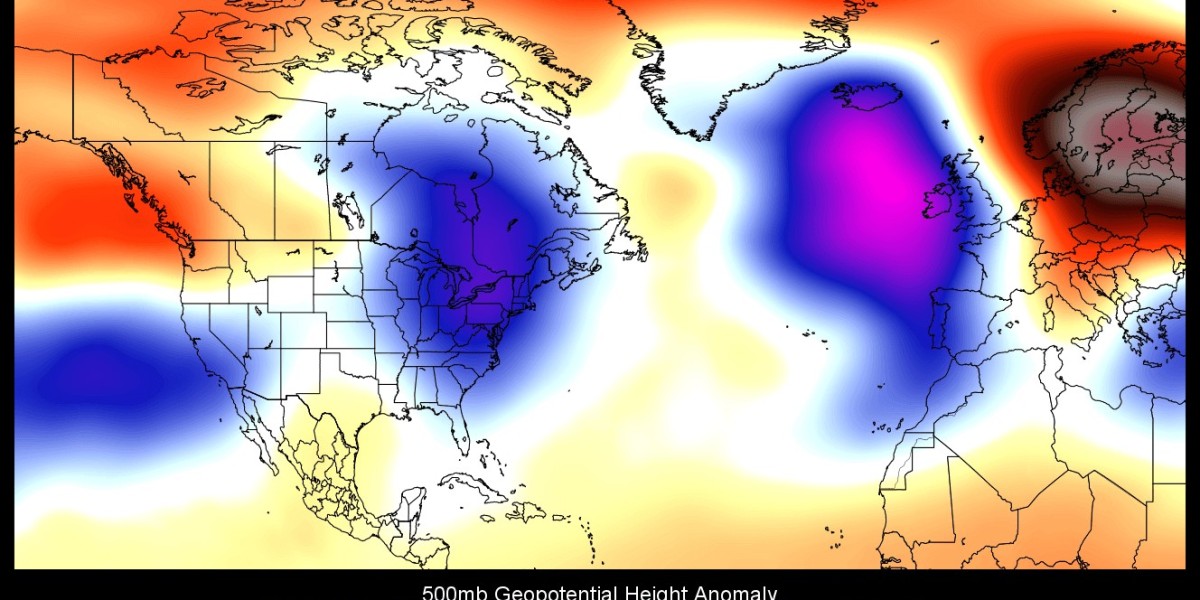

There is a particular kind of silence that falls over a room full of climatologists when the data on their monitors stops looking like a projection and starts looking like an inevitability. It is the silence of an oracle who has just seen the end of the world, or at least the end of the world as we currently understand it. In the sterilized, aggressively air-conditioned laboratories of the U.S. National Oceanic and Atmospheric Administration (NOAA) in mid-June of 2026, that silence was deafening. The Pacific Ocean—that vast, inscrutable blue titan that covers a third of the Earth’s surface—has awakened. And it is angry.
On June 11, 2026, NOAA issued a confirmation that sent shivers down the spines of commodity traders, agricultural ministers, and disaster relief coordinators across the globe: Earth had officially entered the "warm" phase of the El Niño Southern Oscillation, commonly known by its sinister, deceptively gentle Spanish moniker, ENSO. According to the agency's definitive reporting, sea surface temperatures in the central and eastern equatorial Pacific have risen consistently and dramatically above average. We are no longer waiting for the weather to change; the weather has already rewritten the script.
This is not the standard, cyclical warming that occurs every two to seven years, the kind that brings a slightly milder winter to the American Midwest or a damper spring to the Horn of Africa. What is currently metastasizing in the Pacific is something far more formidable. Experts are warning of a staggering 63 percent chance that this system will reach "very strong" status—the ominous classification colloquially known as a "Super El Niño"—by the November-to-January period. The World Meteorological Organization (WMO), the United Nations' authoritative voice on the state of the Earth's atmosphere, corroborated this dread, noting an 80 percent likelihood of a sustained El Niño throughout the summer of 2026, with probabilities escalating to a near-certain 90 percent by the time winter takes hold.
To truly grasp the invisible mechanics of this atmospheric ballet, one need only watch the definitive explainer, What is El Niño?, provided by National Geographic (https://www.youtube.com/watch?v=WPA-KpldXVc). The phenomenon is a masterpiece of planetary disruption. Under normal conditions, powerful trade winds blow westward across the Pacific, pushing warm surface water toward Asia and Australia. This allows cold, nutrient-rich water to upwell along the western coast of South America, sustaining massive fisheries and anchoring the local climate. But during an El Niño, those trade winds falter, weaken, or even reverse. The warm water sloshes violently back toward the Americas. The ocean's internal circulatory system goes into cardiac arrest, and the atmosphere above it responds in kind, shifting global jet streams and radically altering weather patterns from Jakarta to Johannesburg, from Sydney to San Francisco.
Historically, "Super El Niños" are the architects of global trauma. The catastrophic event of 1982-1983 triggered droughts in Australia and Indonesia that sparked massive bushfires, while simultaneously drowning the Peruvian desert in torrential rains that washed away entire villages. Going further back, the monstrous El Niño of 1876-1878 triggered global droughts so severe they led to famines that killed tens of millions of people across India, China, and Brazil—a grim testament to the lethal power of a misaligned ocean.
Yet, as terrifying as those historical precedents are, the 2026 iteration comes with an unprecedented, deeply modern caveat: the Anthropocene. We are not facing a natural phenomenon in a vacuum; we are facing a natural phenomenon on steroids. Human-driven climate change has fundamentally altered the baseline. Our oceans have spent the last century acting as a massive thermal sponge, absorbing roughly 90 percent of the excess heat generated by our relentless pumping of greenhouse gases into the atmosphere. The water is already warmer. The atmosphere is already saturated with energy. When you introduce a "Super El Niño" into a system that is already running a fever, you do not just get extreme weather; you get weather that breaks the scale.
The anticipated impacts of this collision between cyclical variance and secular global warming are severe, far-reaching, and profoundly inequitable. Global temperatures are projected to surge above normal in virtually all corners of the globe for the June-to-August season. The heat is expected to build aggressively across the tropics and subtropics beginning in September, reaching a suffocating crescendo between December 2026 and February 2027, and persisting long into the spring. We are looking down the barrel of a record-shattering year, a sustained period of heat stress that will test the limits of human endurance and the resilience of our infrastructure.
The geography of this impending suffering reads like a map of the world's most vulnerable regions. El Niño operates on a cruel logic of redistribution, stealing rain from places that desperately need it and dumping it on places that cannot handle it. Extensive regions including Australia, Southeast Asia, southern Africa, Central America, the Sahel, and the Indian subcontinent are bracing for crippling drier conditions and prolonged droughts. In these areas, the failure of the rains means the failure of the crops, transforming verdant agricultural belts into scorched, cracking earth.
Conversely, East Africa and parts of North and South America are preparing for an onslaught of water. Increased rainfall and severe flooding threaten to wash away topsoil, destroy infrastructure, and displace millions. The prelude to this disaster is already playing out in real-time; as of June 2026, Guatemala is already grappling with devastating, flood-like conditions that have overwhelmed local emergency services and offered a grim preview of what the coming months hold for the wider region.
The economic and humanitarian consequences of this "Super El Niño" are staggering, arriving at a moment when the global architecture is uniquely ill-equipped to handle them. The global economy is already enduring what analysts are calling a "war shock." The ongoing conflict in the Middle East and the closure of the Strait of Hormuz have driven up energy prices, fueled persistent inflation, and fractured global supply chains. The World Bank has recently slashed its global growth forecast for 2026 to a meager 2.5 percent, marking the weakest economic outlook since the depths of the COVID-19 pandemic.
Now, layered on top of this geopolitical fragility, comes the "weather shock." The intersection of these crises is a recipe for a polycrisis of unprecedented proportions. When crops fail across Southeast Asia and the Indian subcontinent, global food prices will skyrocket, exacerbating the inflation that central banks have spent years trying to tame. But while the wealthy in the Global North will merely complain about the rising cost of groceries from the comfort of their air-conditioned homes, the world's poorest will face the very real specter of starvation.
Recognizing the sheer scale of the looming catastrophe, the international community has begun to mobilize, though their efforts feel tragically inadequate against the sheer force of the Pacific Ocean. The Food and Agriculture Organization (FAO) and the World Food Programme (WFP) have launched a frantic, joint appeal for $202 million. Their goal is to implement anticipatory actions to protect approximately nine million people across 22 highly vulnerable, at-risk countries.
This funding is intended to provide drought-resistant seeds, distribute animal feed to pastoralists, and establish early-warning systems before the worst of the weather strikes. Yet, to put this figure into the stark, cynical perspective of the modern age, $202 million is less than the production budget of a mid-tier Hollywood blockbuster; it is a fraction of what a single tech billionaire might lose in a morning of volatile stock trading. To ask such a paltry sum to stand as the bulwark against a global atmospheric upheaval is to highlight the grotesque inequities of our global financial priorities.
Beyond the immediate threat of starvation and drowning, the "Super El Niño" carries a dark, trailing shadow of secondary crises. The WMO and health organizations are warning of a significant spike in pest-borne diseases. Mosquitoes, thriving in the warm, stagnant waters left behind by unseasonal floods, will carry malaria and dengue fever into new, previously untouched latitudes. Severe malnutrition will weaken the immune systems of millions of children, making them susceptible to illnesses that are easily preventable in a functioning society. And, inevitably, the breakdown of agriculture and habitability will trigger mass displacement. We are facing a surge of climate refugees, millions of people forced to abandon their homes not because of war or persecution, but because the sky either refused to rain or refused to stop.
As June bleeds into July, and the Pacific Ocean continues to hoard its heat, the reality of the situation is settling over the globe like a heavy, humid blanket. The 2026 "Super El Niño" is not merely a weather event; it is a profound stress test for humanity. It is an arbiter that will mercilessly reveal the cracks in our infrastructure, the fragility of our economies, and the limits of our compassion. We have spent the last century pretending that we could dominate the natural world, that our technology and our wealth could insulate us from the chaotic whims of the planet. But as the trade winds falter and the ocean warms, we are being violently reminded of a humbling, inescapable truth: the Earth is the house, and the house always wins.
In the hushed, glowing rooms of NOAA and the WMO, the scientists will continue to watch their screens. They will measure the rising temperatures, track the shifting winds, and issue their precise, data-driven warnings. But the time for mere observation has passed. The leviathan has awoken, the waters are rising, and the only question left is who will be able to afford a seat on the lifeboat.