.png)
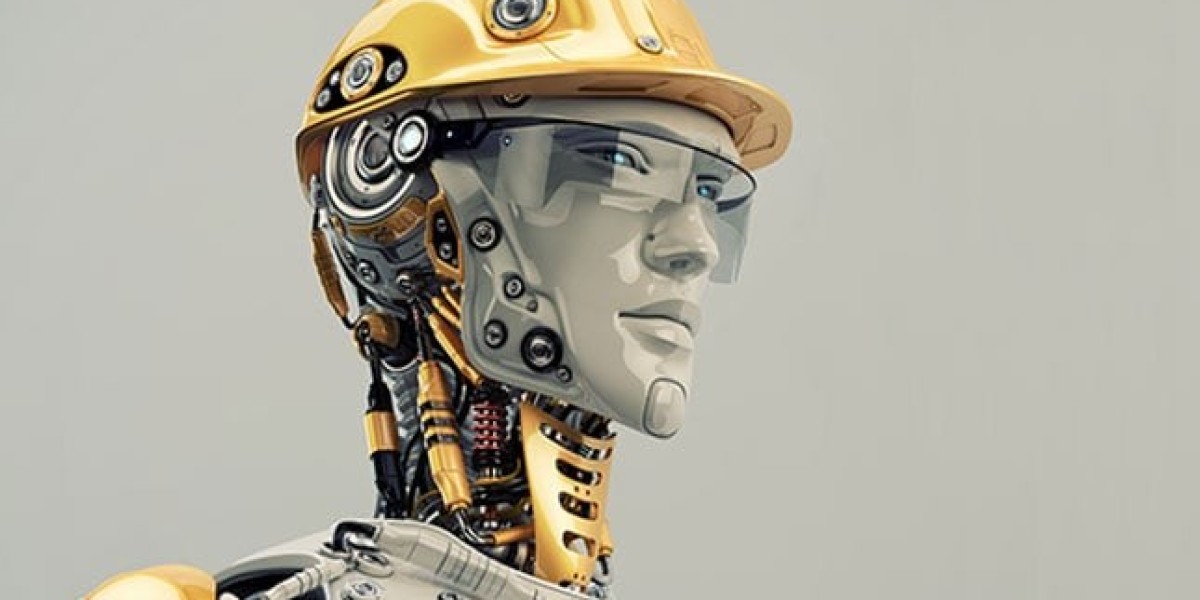

“What will our world be like when robots can do all of the jobs that humans currently do? ” This is a question many people are asking as AI becomes more and more prevalent in society. The answer to this question, though difficult to predict, may not be too far away. It is important for us to consider what potential future we want for ourselves before it is too late. In this blog post, I will discuss some of the jobs most likely to become automated by Artificial Intelligence (AI). As a starting point, I will begin in the industry of medicine, as it is one that many people are familiar with and can understand quickly.
I believe it is at least an order of magnitude harder to guess what percentage of jobs could become automated by AI. There are too many jobs in existence today, so estimating how many those are that could be automated is difficult. Because of this, I will focus on AI taking over entire professions. I believe that for most people the idea that their job could be automated by AI in the next 5-10 years seems far away, but if you work as a nurse or a doctor it may not be so distant (as we will see).
I also want to note that I am not an expert in this field or any other. Everything I say on this subject is my understanding of the facts and nothing more. This post will be mostly about jobs that likely exist today, but with a little extrapolation, it can also touch upon jobs that may exist in the future.
Feel free to comment if you find any mistakes/errors, or if you have anything to add.
Nursing and doctors
The role of a nurse is often described as “to heal those who are sick” ( source ). This is because nurses need to have a wide range of knowledge so that they can do everything from administering medicine to comforting someone who is sick. This role has been around for thousands of years, emerging as people began to live longer and had more means of fighting illness ( source ).
A doctor has a similar role: to heal those who are sick. But the role is different in that it requires a much higher level of academic achievement due to the complexities involved in treating the human body. The job is usually described as “providing knowledge and experience to assist in promoting health” ( source ). As the population of people continues to grow, so too will demand for doctors.
So which one could be automated by AI first? It may not come as a surprise that I think it is probably the nurse. Doctors may have a higher level of academic achievement (and require more knowledge), but nurses cover a much wider job description and interact with patients more, which is one reason why it may be easier for AI to replace nurses than doctors.
The steps involved in becoming a nurse vary depending on where you live, but the general process is as follows:
1. High school diploma or equivalent
2. Complete a post-secondary program in nursing (associate's degree) from an accredited college or university which usually takes about two years to complete. Most programs include classroom and clinical experience. Graduates of these programs are prepared for the NCLEX-RN, a national exam for licensure as a registered nurse.
3. Gain experience (this can be paid or unpaid) in the field of nursing while enrolled in an ADN program
4: Take the NCLEX-RN exam and if you have enough experience, apply for a job as a registered nurse ( source ).
So to become a nurse you need to have completed a post-secondary program and gained experience, while doctors are required to have an extended period of higher education before they can even apply for their job. From this it may seem like becoming a doctor is much harder than becoming a nurse. However, with new technology (AI) coming out every year it may only be a matter of time until computers can figure out how to pass the NCLEX-RN exam as well.
The role of a doctor requires much higher levels of academic achievement, but nurses actually cover a pretty wide range of responsibilities which is why I think it's easier for AI to take over this role first.
There is a TED talk by James Young who is a doctor who uses AI to assist in his medical diagnoses. He details the many ways that data and machine learning are advancing medicine today:
Jobs that Exist Today
The subject of this post is jobs that exist today, but with new technology being created every day we are coming closer and closer to a world where robots can do almost everything we can. To get a better idea of what that world might look like, it is helpful to think about some jobs that exist today and then extrapolate from there.
The following are some examples:
Delivery jobs - Uber has been around for a few years now, but recently companies such as Amazon, Alphabet, and Uber have been investing in autonomous delivery vehicles to possibly replace the need for humans to make deliveries. These vehicles would eventually lead to a decrease in the number of people employed by these companies.
Customer service jobs - Many of the people who work for customer service are looking at their phones while they're talking to customers and are reading whatever information pops up on the screen. According to a customer service manager, about 80% of calls could be automated.
These two examples show how AI is slowly making its way into the workplace and replacing jobs that were once considered safe from automation. If you watch any episode of Silicon Valley you'll know that this is an issue that tech industry leaders are trying to figure out. The current consensus is that while AIs can replace certain jobs, they cannot yet do everything that a human can do so they will likely not be replacing humans any time soon ( source ).
And there's nothing wrong with that. We need AI because it allows humans to be more efficient. However, AI and automation will eventually lead to some job losses, especially in the service industry where we see a high number of jobs that are already being replaced by machines ( source ).
Many people who earn their primary income through a job would like to have side hustles because they can make money while doing something else. However, the people who are part of these programs believe that their primary job is good for them because it gives structure to their life and they feel like they are providing a needed service ( source ).
So I think it's safe to say that there will always be jobs out there as long as humans need things like shelter and food, but it would be interesting to see how many jobs exist in the future.
If you watched the video on Amazon's drone delivery service then you know that consumer demand for artificial intelligence is on the rise. Many people believe that AI and automation will change our world, but they also fear it because of job losses. For example, there have been several articles about the worrying new trend of automation where it is pretty clear that human workers are losing their jobs to machines.
In a recent survey, 51% of Americans said they were worried about being replaced by robots at work.
The CEO of Wired magazine had this to say about AI: "In 50 years, I don't think people will be owning their own cars. They'll be driving autonomous vehicles".
The CEO of Google said this about AI: "One reason I'm encouraged about the future is that if you look at what's happened in computing historically, from the PC to the Web, every time someone has predicted that these machines would do the jobs of people they underestimated the human will to survive and excel".
So I don't think AI is going to replace all jobs, but it definitely has an influence on which fields are popular. And according to a recent article from Forbes, "the race for AI talent is being propelled by the vast amounts of data that companies are using to train their algorithms."
However, there are still people who think that AI will eventually replace human workers. In a recent survey conducted by the Pew Research Center, 51% of Americans said they were worried about being replaced by robots at work ( source ).
So despite all of this fear surrounding artificial intelligence, tech industry leaders are predicting an equal future where AI works together with humans, not against them. However, we are still looking at a future where jobs will be lost due to automation and robotics. And the largest number of jobs that robots have taken over is in the service industry.
The customer service department is just one example where 50% of jobs have already been taken over by robots ( source ).
Another major field that is being replaced by machines is cashiers at the grocery store. Approximately 5,000 stores in the US plan to replace all of their employees with self-checkout machines ( source ).
And this trend isn't only happening in the United States. As you can see in the chart below, "industrial robots have spread to .... countries around the world" ( source ).
So I think it's safe to say that there will always be jobs out there as long as humans need things like shelter and food, but it would be interesting to see how many jobs exist in the future.