.png)
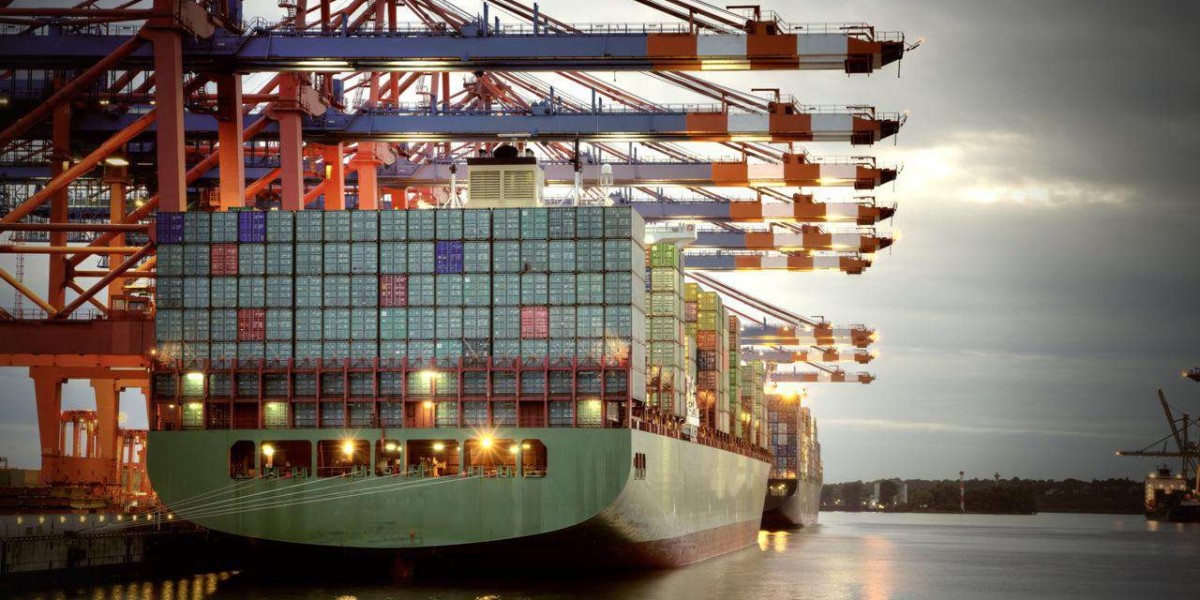

You may be wondering how you can get into the import and export business. It's a good question to ask, as it is not an easy industry to enter. To start out, there are three things you need to do: 1) find a product that has enough demand for both domestically and internationally; 2) find suppliers who will work with your company; 3) land distribution agreements with retailers or distributors at home and abroad. If you want more information on how to get started in this business, read our blog post today!
How do I get into the Import Export Business?
Start by looking for goods that will sell well domestically and abroad. If you want to get into this industry, you're going to need to find the right product; otherwise it could flop. Some products that may work are: baby formula, medical supplies or equipment, food items/ingredients (particularly those difficult to find locally), electronics, clothing items, and coffee beans. Take a look at market research reports to see what type of products are in demand in your home country and abroad.
Finding suppliers who will work with you can be difficult, as most suppliers don't know how to handle the import/export process. They may not have people on staff who can help you, or they may not have the time to take on additional business. You will need to convince them that working with you is worth their time and energy by showing them examples of what you can bring in, such as market reports. Some ways you could find suppliers are: searching the internet, calling potential candidates and asking for referrals, or visiting one of the many trade shows held around the world.
Distribution channels are crucial to your success as an importer/exporter. You will need to find retailers or distributors at home and abroad who are willing to work with you, as well as other people in the industry who can help (i.e.: freight forwarders). Take a look at other companies in the industry, as well as trade publications to find people who can help you. Some other strategies include: contacting your local Chamber of Commerce, attending trade shows and conventions around the world, or using social media sites like Twitter and Facebook.
When you have found suppliers, retailers or distributors, landed distribution agreements with them, and finally, the right product that has demand domestically and internationally, you will then be able to get into the import/export business! However, this still does not mean that your company will succeed. You should also look at hiring employees for your office who are experienced in the industry to ensure that your company runs smoothly, as well as negotiate with other companies for warehousing. If you do all of this, you should certainly be successful in starting an import/export business!
What is the Import Export Business?
The import-export business is the commercial exchange of merchandise between two countries. The merchandise can be anything from machinery to shoes to apples. Payment for imported commodities is made by wire transfer. Transactions are denominated in U.S. dollars, even when they involve other currencies such as Euros or Yen that are converted into dollars. The commercial exchange might involve importing raw materials for assembly into finished goods that are exported to other countries, or it could simply involve the importation of foreign-made equipment that is then used in commercial production within the United States.
The export side of the business involves selling goods and services to customers outside of one's country. Goods can be exported to customers abroad, or to other offices of the same company located in different parts of the world. Usually, one-time sales are involved, but services can be exported on a continuing basis.
The Import Export business is not limited to companies engaged in international trade; any firm which buys and resells goods nationally or internationally can compete as an importer. And many domestic companies, even those that produce all their own goods, handle the importation of raw materials or spare parts into their plants; these companies are thus "importing" for internal consumption.
Imports and Exports - Definition and Overview
Imports and exports are integral to a nation's economy as they stimulate growth domestically and provide revenue internationally. Imports are goods brought into a country from another nation, while exports are goods shipped out of the country to foreign destinations. Nations that have established trade agreements often find that they can export without too much competition because their competitive edge is recognized by other countries that accept them as trading partners.
What is the history of importing and exporting?
The earliest written records of trading practices in Mesopotamia are from ca. 2350 B.C., when city-states in Sumer were conducting trade with merchants in Asia Minor or modern Syria. The emergence of thalassocracies, powerful nation-states able to exact monopolistic prices for their exports, coincided with the expansion of exploration in the 15th century. The "discovery" of America by Christopher Columbus in 1492 led to Spanish exports (gold, silver), but later gave way to Britain's domination in textile production and its ability to control trade routes (Thalassocracy).
How did it all start?
Everything that is manufactured in one country has to be imported from somewhere else. There are very few things that are actually made entirely in just one country anymore. Even if a product seems to have been produced only in the United States, it is quite likely that parts of it were made elsewhere -- perhaps even by your competitors!
Is it worth it?
Yes, the potential profits are considerable. However, importing and exporting can be very risky. You may buy an item for $5,000 in one country only to ship it across the ocean and find out that you can't sell it for more than $4,000. The shipping costs alone could easily exceed your profits -- that is, if you don't have to pay duties and taxes on the item. On the other hand, let's say you buy an item for $4,000 in another country only to find out that it can be sold here for $6,000. You might actually come out ahead even after paying high U.S. prices for labor and materials to make the item.
What motivates entrepreneurs to start importing and exporting businesses?
It's important for anyone who wishes to open an import/export business or extend an existing one to understand that these are high-risk ventures where there are no guarantees of success. An entrepreneur considering this course of action should be willing and able to absorb the possibility of substantial losses, but should also have a keen sense of adventure and a 'take-no-prisoners' attitude toward competition. In other words, it's not for everyone!
What is the process to start an import/export business?
Buying goods from foreign suppliers and selling them in one's own country is called importing. The reverse process, exporting goods purchased within the domestic market to foreign buyers, involves shipping the product to its destination and arranging payment through a bank or other institution in that country. Loading costs are higher for exports than for imports because it's assumed that there will be more handling involved in loading the exported products onto ships at their point of origin.
What are the benefits of an import/export business?
Simply put, this is a way to make money on something you can buy cheaply in one country and sell for a higher price in another. The more different kinds of goods that you import, the greater the potential profits will be.
Who provides support for importing and exporting?
There are numerous resources you can turn to for help in your business. The Department of Commerce provides many services to exporters through its International Trade Administration (ITA). ITA's Export Assistance Centers provide counseling on trade opportunities, market research, product design, packaging, shipping procedures and other topics. ITA also operates the Export Trading Company Program, an information clearinghouse on exporting procedures and a matchmaker for identifying potential partners. In addition to the ITA, you should check with your state's international trade office or the International Trade Administration Commission of many states provides counseling on starting businesses, finding financiers and obtaining Export Documentation Services from the U.S. Customs Service.
Where can I find more information?
The Department of Commerce has several publications that are very helpful to exporters, including "Export - 2000," "Exporting Made Easier" and "A Basic Guide to Exporting." You can order them from the Economic Bulletin Board at 1-800-USA TRADE or by visiting http://www.ita.doc.gov/tbp/request/bulletinboard/.
As you can see, there are many benefits of starting an import-export business; however, it is also very risky; even though the potential profits may be considerable, there are no guarantees or offers for assistance. Before starting any type of importing or exporting business, one must know what they're getting into and study this industry thoroughly. This is not a get rich quick scheme, but more of an adventure of business. It's important to find the right supplier that has quality products at reasonable prices, keep in contact with your clients on a regular basis and have patience when it comes to shipping. When you do all these things properly, you will have yourself an extremely successful business that will be very beneficial in the long run.