
Megapixels, Celluloid, and the Doom Scroll: The Identity Crisis of the 2026 Cinema Camera
In the velvet-roped, champagne-fueled corridors of Hollywood, where the difference between a box-office behemoth and a streaming-service afterthought is often measured in millimeters and megapixels, a quiet revolution is taking place. It is not happening in the mahogany-paneled agents' offices at CAA, nor on the sun-drenched, gossip-heavy patios of the Chateau Marmont. Rather, it is unfolding in the sterile, hyper-engineered laboratories of the world’s foremost imaging companies. We have officially entered the summer of 2026, and the cinema camera—that mechanical muse, the cyclopean eye through which our modern myths are recorded—is undergoing an identity crisis of spectacular proportions. It is a crisis that perfectly mirrors our own cultural whiplash: a desperate, aching nostalgia for the analog past, colliding head-on with a relentless, insatiable demand for the towering, ultra-high-definition future.
If you had strolled through the labyrinthine aisles of the Cine Gear Expo in Los Angeles this past June, bathed in that uniquely unforgiving Southern California light, you would have felt this tension vibrating in the air. The industry's most revered cinematographers—the sort of men and women who speak of "color science," "dynamic range," and "sensor readout speeds" with the same hushed, obsessive reverence that sommeliers reserve for a vintage Bordeaux—were gathered to witness a tectonic shift. We are no longer merely iterating on the same black boxes; we are bifurcating. On one end of the spectrum, there is a triumphant, tear-stained return to the romantic, tactile allure of celluloid. On the other, there is a plunge into the sort of colossal digital sensors that threaten to render reality itself somewhat dull by comparison. And somewhere in the middle, an unapologetic concession to the inescapable dominance of the smartphone screen. The modern camera, it seems, is frantically trying to be all things to all auteurs.
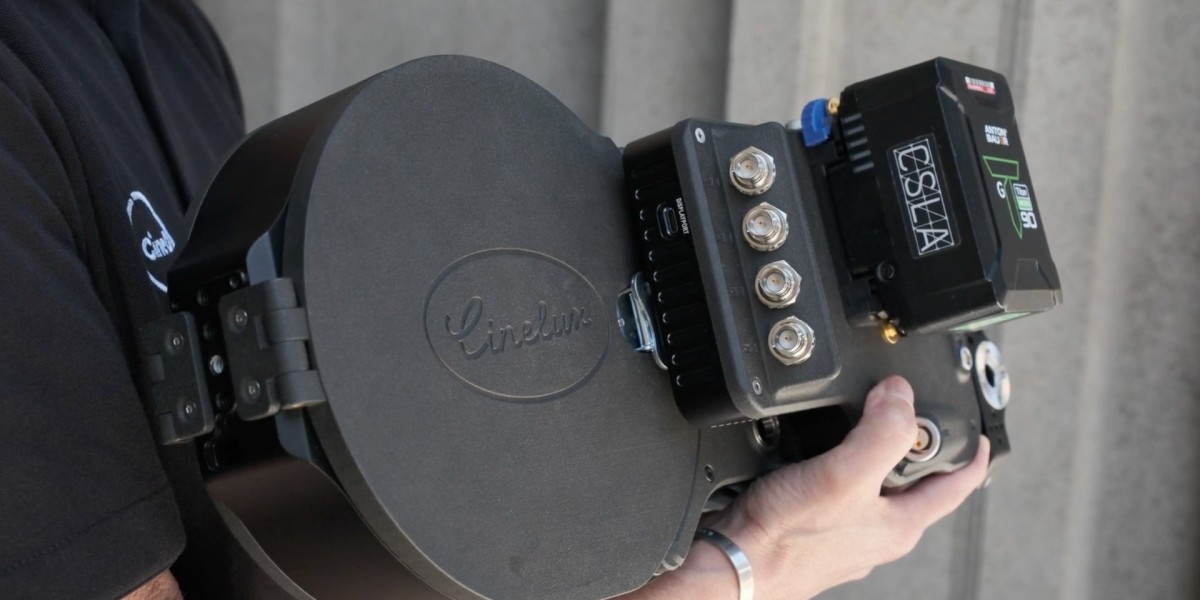
Consider, for a moment, the romantic folly and sheer, unadulterated brilliance of the Cinelux SIXTEEN. Unveiled to gasps as a working prototype on June 5, 2026, it is perhaps the most audacious piece of cinematic machinery to debut this decade. For years, the industry has mourned the slow, agonizing death of film, eulogized by purists like Quentin Tarantino, Paul Thomas Anderson, and Christopher Nolan, who violently refuse to surrender the grain, the halation, and the sheer, unquantifiable *soul* of photochemical capture. Yet, the brutal economic and logistical realities of modern production—the breathless demands from studio executives for immediate dailies, instant digital proxies, and frictionless post-production workflow speeds—have made shooting on actual film a luxurious indulgence reserved for the upper echelon of studio darlings.
Enter Project SIXTEEN, a brazen, almost hubristic attempt to have one's celluloid cake and eat it digitally, too. The Cinelux SIXTEEN is a hybrid cinema film camera. It represents the first entirely new film camera platform announced in over twenty years (No Film School, 2026). Its premise is as elegant as it is mechanically complex: the camera is designed to expose real, tangible Super 16mm film through its gate while simultaneously capturing a separate, pristine digital image from the mirror path during a single shutter revolution. One click, two realities. One chemical, one binary.
According to technical specifications released following its June debut, the prototype incorporates a 13.35 mm by 7.42 mm digital sensor capable of recording 3K resolution footage at up to 48 frames per second digitally, while the physical film mechanism hums along in perfect synchronicity (PetaPixel, 2026). It is, as the makers proudly proclaim, an "analog cinema re-evolution." It provides the high-fidelity digital feed, the Apple ProRes 444 HQ files, the crucial metadata, and the timecode that anxious producers and restless editors demand, all while burning the indelible, chaotic magic of light onto silver halide crystals. Cinelux is even developing live film emulation technology, ensuring that the digital monitor accurately reflects the chemical reality of the film stock being used—how the shadows will crush into velvety oblivion, how the highlights will gracefully clip. Expected to hit the market in 2027 for roughly the price of a used, battered ARRI 416, the Cinelux is a bridge between the romantic past and the hyper-efficient present. For the modern indie darling aiming to capture the gritty, tactile feel of a 1970s New York street drama without sacrificing the safety net of a CFexpress Type B card, it is nothing short of a miracle.
But if the Cinelux SIXTEEN is a tender love letter to the intimate, grainy poetry of the past, the newly announced Sony RIALTO 65 is a Wagnerian opera of digital maximalism. Sony, a sprawling conglomerate that has spent the last decade quietly and ruthlessly dominating the high-end digital cinema market with its VENICE line, has decided that full-frame—once the gold standard of digital capture—is simply no longer enough. We live in the era of the immersive, overpowering spectacle, where audiences, lured away from their living rooms, demand to be swallowed whole by the image, enveloped in the staggering, awe-inspiring grandeur of IMAX-sized narratives.
To that end, Sony unveiled the RIALTO 65 at Cine Gear, a massive 65mm format image sensor block designed to transform its existing VENICE 2 platform into a terrifying leviathan of digital cinematography. Scheduled for a highly anticipated rollout in the first half of 2027, this sensor is a feat of modern engineering that frankly borders on the absurd (Digital Camera World, 2026). With a diagonal size of approximately 64.60 millimeters, its light-receiving area is roughly 2.2 times the size of a standard full-frame image sensor. It is a monstrous, light-guzzling beast capable of an eye-watering 9.6K open-gate recording in a 3:2 aspect ratio.
To understand the cultural weight of 65mm, one must look back to the titans of cinema history: this was the format that captured the scorching deserts of *Lawrence of Arabia* and the cold ballet of *2001: A Space Odyssey*. Translating that colossal scale into the digital realm is no small feat. Why, one might reasonably ask, does anyone actually need 9.6K resolution? It is not merely about forensic sharpness; it is about the very geometry of storytelling. A sensor of this magnitude provides an impossibly shallow depth of field, allowing a director to isolate a subject with razor-thin precision against a softly weeping, impressionistic background. It creates a dramatic, overwhelming sense of scale. It is the digital equivalent of painting on the ceiling of the Sistine Chapel.
Furthermore, the RIALTO 65 is brilliantly, cunningly modular. Recognizing that a camera of this size could be a logistical nightmare to rig to a Russian Arm speeding down a highway, or to squeeze into the claustrophobic cockpit of a fighter jet, Sony designed the sensor block to be detachable. It can operate remotely via a tethered cable connection to the VENICE 2 body, offering the nimbleness of a much smaller system without sacrificing an ounce of visual majesty (Y.M. Cinema Magazine, 2026). When Sony confidently demonstrated the bare, shimmering wafer of the RIALTO 65 sensor in June, it was viewed by the industry not just as a product announcement, but as a brazen flex of manufacturing supremacy—a declaration that in the multi-billion-dollar arms race of digital imaging, Sony definitively holds the nuclear codes. For an extensive visual breakdown of the newest digital cinema innovations that are shaking the foundations of the industry, viewers can explore detailed coverage via this industry showcase: https://www.youtube.com/watch?v=KHwoRxGfXuU .
Yet, for all the lofty talk of 65mm grandeur and Super 16mm indie nostalgia, there is a third, somewhat more insidious trend reshaping the cinematic landscape—one driven not by auteur theory, but by the cold, hard logic of algorithms. We must, inevitably, talk about the TikTok-ification of visual storytelling. For over a century, the cinematic image has been stubbornly horizontally oriented; our eyes are arranged side-by-side on our faces, our opulent theaters are wide, and our flat-screen televisions are panoramic. But a generation raised entirely on smartphones consumes the world vertically.
For years, esteemed cinematographers faced with the grim, soul-crushing reality of "social deliverables" have simply gritted their teeth, shot horizontally, and awkwardly cropped the image in post-production. It is a compromise that sacrifices resolution, destroys the intentionality of the focal length, and eviscerates the soul of the framing. Enter the Bosma VEGA H2, quietly released on June 10, 2026, a camera that boldly accepts our vertical dystopia and engineers a sleek, unapologetic solution (Y.M. Cinema Magazine, 2026).
The Bosma VEGA H2 is a 6K full-frame digital cinema camera built specifically, and without a trace of irony, for the era of the "doom scroll." Its pièce de résistance is a physical Horizontal and Vertical Switching (HVS) system. Rather than relying on lazy software cropping, the camera allows the operator to physically rotate the entire, massive imaging system. It is a true cinema-grade tool, complete with 6K open gate recording up to 60 frames per second and rigorous internal codecs like ProRes and ALL Intra, yet it is optimized entirely for a towering 9:16 aspect ratio.
Aimed squarely at the solo operator—the influencer-auteur, the brand-content visionary—the VEGA H2 represents a profound philosophical shift in how we value images. It acknowledges a stark reality: the primary destination for moving images is no longer the darkened multiplex or the premium cable channel, but the shimmering, endless feed clutched in the palm of our hands. The vertical frame traps the eye, limits peripheral vision, and creates an intimate, almost claustrophobic relationship with the subject that horizontal cinema can rarely achieve. It is a beautifully constructed, impeccably engineered capitulation to the modern attention economy.
To observe these three wildly divergent technologies—the chimera-like hybrid Cinelux, the gargantuan, world-eating Sony, and the unapologetically vertical Bosma—is to look at a fractured, fascinating portrait of contemporary media in the summer of 2026. We are a society being pulled in diametrically opposite directions by our own technological prowess. We desperately crave the authenticity, the flaw, and the tactile reality of analog film because it feels unmistakably human in an increasingly synthetic, AI-generated world. Simultaneously, we demand the 9.6K, 65mm crystalline clarity of the RIALTO 65 because our appetites for spectacle have been gorged to the point of absolute gluttony; we want to see every pore, every blade of grass, every microscopic detail of the fantasy. And yet, practically speaking, we consume the vast majority of our media in fleeting, vertical glimpses while waiting in line for our overpriced oat milk lattes.
The cinematographers navigating the backlots and location shoots of 2026 are no longer merely technicians; they have become cultural translators, forced to choose which of these realities they want to inhabit on any given day. Will they mount the Cinelux SIXTEEN to capture the raw, emotional truth of a gritty independent drama, praying the physical film magazine doesn't jam while secretly reveling in the safety of the digital proxy? Will they tether the Sony RIALTO 65 to a high-speed drone, capturing a sweeping, billion-pixel vista for a superhero blockbuster that the audience will ultimately watch on an airplane tablet? Or will they rotate the sensor of the Bosma VEGA H2, meticulously crafting a perfectly lit, impeccably color-graded, 15-second masterpiece designed to be mindlessly swiped away and instantly forgotten?
This is the chaotic, thrilling, utterly glamorous state of visual storytelling today. The tools we use to capture reality inevitably, and fundamentally, shape the reality we capture. As the lines between high cinematic art, commercial blockbuster spectacle, and ephemeral social content continue to blur into meaninglessness, the cameras themselves have arguably become the most fascinating characters in the Hollywood drama. They are gorgeous monuments to our contradictory desires—half-mechanical, half-digital beasts that see the world clearer, wider, and taller than we ever could.
As the exhausted industry finally packs up the neon-lit booths from Cine Gear and retreats back to the cavernous soundstages of Burbank and the darkened digital grading suites of Soho, one thing remains abundantly clear: the golden age of the cinema camera is not trapped in the storied, mythic past of ancient Arriflexes and Panavisions. It is happening right now, in the glorious, messy, impossibly high-resolution present.