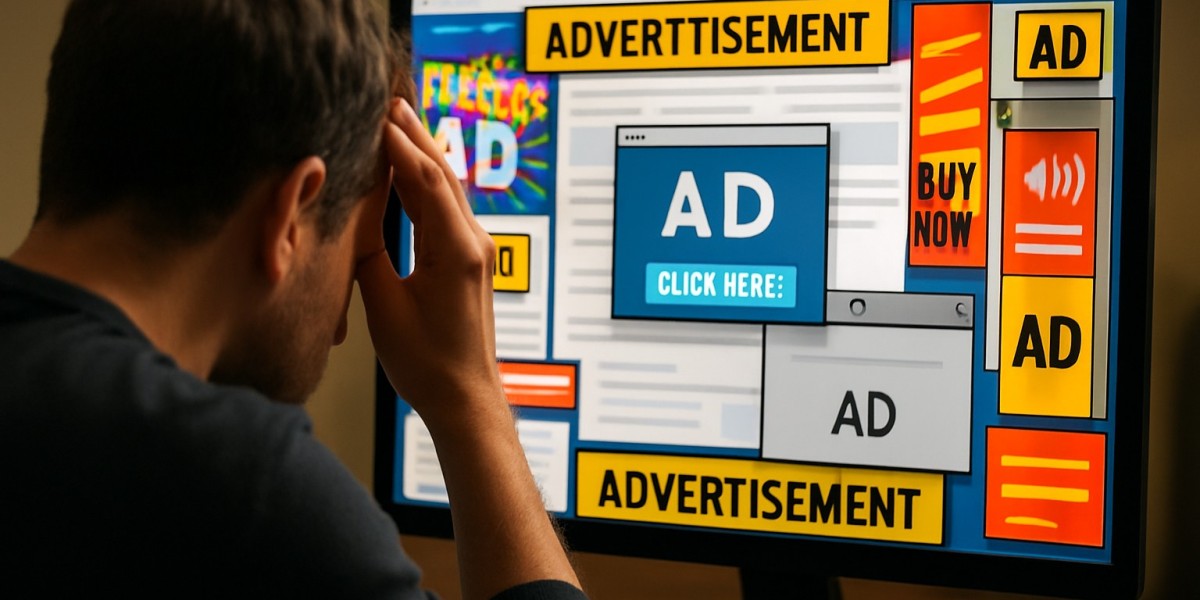

Why So Many Websites Are Unreadable: The Display Ad Dilemma
Imagine you’re searching for a quick recipe, a news update, or some expert advice. You click a promising link, only to be greeted by a barrage of pop-ups, auto-playing videos, and banners that push the content so far down the page it’s almost impossible to find. You squint, scroll, and dodge “Subscribe Now!” overlays, but by the time you reach the information you wanted, you’ve forgotten why you came in the first place.
If this sounds familiar, you’re not alone. The modern web, once celebrated as an open, accessible information utopia, is now plagued by a crisis of readability. The culprit? Display ads-those banners, pop-ups, and interstitials that have taken over our screens. While advertising is essential for keeping much of the internet free, the relentless proliferation of display ads is making too many websites unreadable, driving users away and undermining the very content they’re meant to support.
In this article, we’ll explore how display ads became so dominant, why they’re making websites nearly impossible to read, and what can be done to restore balance between revenue and user experience.
The Proliferation of Display Ads
A Brief History
Display advertising isn’t new. The first banner ad appeared in 1994 on HotWired.com, and for a while, it was a novelty-an unobtrusive rectangle inviting you to click and learn more. Fast forward to today, and the landscape has changed dramatically. Websites are now crowded with a dizzying array of ad formats: banners at the top and bottom, sticky sidebars, pop-ups, interstitials that block the entire screen, auto-playing video ads, and even ads that follow you as you scroll.
According to a 2023 study by AdGuard, some news sites now serve over 90 ad units per page. On certain entertainment or recipe sites, ads can outnumber the actual paragraphs of content. The “adpocalypse” isn’t just a buzzword-it’s a defining feature of the modern web, and it’s getting worse.
Why So Many Ads?
The answer is simple: money. As traditional ad revenues decline and competition for user attention intensifies, publishers are under immense pressure to monetize every pixel of their sites. Programmatic ad networks, which automatically fill ad spaces with the highest-bidding content, incentivize publishers to cram as many ad slots as possible onto each page. The result is a web experience that prioritizes quantity over quality, with little regard for how it affects the reader.
How Display Ads Undermine Readability
Blocking and Overlapping Content
One of the most egregious ways display ads hurt readability is by physically blocking the content. We’ve all encountered the dreaded full-page pop-up that appears just as you start reading, often with a tiny, hard-to-find “X” to close it. Sometimes, the close button is deliberately obscured or delayed, forcing you to engage with the ad before you can proceed. On mobile devices, where screen real estate is limited, these intrusions are even more disruptive.
It’s not just pop-ups, either. Sticky banners and floating ads can overlap text and images, making it difficult or impossible to see what you’re trying to read. In some cases, ads are coded so poorly that they break the layout of the page, causing text to jump around or disappear altogether.
Disrupting the Flow
Even when ads don’t physically block content, they can still disrupt the reading experience. Auto-playing video ads with sound can startle readers and force them to hunt for the mute button. Interstitial ads-those that appear between pages or as you scroll-interrupt your flow and break your concentration. Some sites use “infinite scroll” features that load more ads with every swipe, making it feel like you’re wading through a swamp of distractions just to find a few lines of useful information.
Destroying Visual Hierarchy
Good web design relies on a clear visual hierarchy, guiding the reader’s eye from headlines to subheadings to body text. Display ads, especially when poorly integrated, shatter this hierarchy. Flashing banners, animated GIFs, and mismatched color schemes draw attention away from the content and toward the ads themselves. Eye-tracking studies have shown that users are less likely to read articles when ads are placed within or adjacent to paragraphs, as their eyes are constantly pulled away from the text.
The User Experience Crisis
Frustration and “Ad Rage”
The cumulative effect of these intrusions is a phenomenon some experts call “ad rage.” Users become so frustrated with aggressive ad tactics that they abandon sites entirely, sometimes vowing never to return. According to a 2022 survey by HubSpot, 91% of respondents said ads are more intrusive today than two years ago, and 66% said they’ve stopped visiting sites with too many ads.
Slow Performance and Technical Issues
Display ads don’t just annoy users-they also slow down websites. Heavy ad scripts can increase page load times by several seconds, especially on mobile networks. Some ads are so poorly coded that they crash browsers or cause pages to freeze. In the worst cases, malicious ads (known as “malvertising”) can infect users’ devices with malware or redirect them to scam sites.
Mobile Mayhem
On smartphones and tablets, the problem is even more acute. Smaller screens mean there’s less room for both content and ads, so the latter often ends up covering the former. Mobile pop-ups can be nearly impossible to close, and accidental clicks are common. Google has even started penalizing sites with intrusive mobile ads in its search rankings, but the problem persists.
Manipulative Tactics
Some publishers go beyond simple annoyance and employ manipulative tactics to force engagement. “Confirmshaming” pop-ups use guilt-tripping language (“No thanks, I don’t want to save money”) to pressure users into subscribing or clicking. Others use countdown timers or fake notifications to create a false sense of urgency. These dark patterns erode trust and make users even more likely to abandon the site.
Why Publishers Overload Pages with Ads
Economic Pressures
It’s easy to blame publishers for the state of the web, but the reality is more complicated. Ad revenue per impression has been declining for years, thanks to factors like ad blockers, privacy regulations, and competition from social media platforms. To make up the difference, publishers feel compelled to increase the number of ads per page, hoping that volume will compensate for lower rates.
The Programmatic Ad Machine
Programmatic advertising has revolutionized the way ads are bought and sold, but it’s also created perverse incentives. Ad networks reward publishers for maximizing ad inventory, regardless of how it affects user experience. In some cases, third-party ad networks insert their own ads into pages without the publisher’s direct control, leading to even more clutter and chaos.
Short-Term Gains vs. Long-Term Trust
For publishers, the temptation to prioritize short-term revenue over long-term trust is strong. A site that doubles its ad load might see an immediate boost in income, but at the cost of alienating its audience. Over time, this can lead to declining traffic, lower engagement, and a vicious cycle of ever-increasing ad density.
The Paradox: Do More Ads Always Mean Fewer Readers?
Mixed Evidence
Interestingly, the relationship between ad load and user engagement isn’t always straightforward. Some studies have found that reducing the number of ads on a page doesn’t necessarily lead to higher engagement or longer time on site. In certain cases, users spent less time on sites with fewer ads, possibly because they scrolled less or found the content less engaging without the visual stimulation of ads.
The Halo Effect
There’s also evidence of a “halo effect,” where the presence of multiple ad types (display, native, video) can make a site feel more dynamic or authoritative, at least in the short term. However, this effect is often outweighed by the negative impact of intrusive or irrelevant ads, especially when they disrupt the reading experience.
The Bottom Line
Despite these nuances, the overall trend is clear: intrusive, poorly integrated ads drive negative perceptions and reduce content consumption. Users may tolerate a certain level of advertising, but when it crosses the line into annoyance or obstruction, they’re quick to click away.
The Path Forward: Balancing Revenue and Usability
Embracing Less Intrusive Formats
The good news is that there are alternatives to the current ad overload. Native advertising-ads that match the look and feel of the surrounding content-can be effective without being disruptive. Sponsorships, affiliate links, and branded content offer additional revenue streams that don’t rely on bombarding users with banners and pop-ups.
Improving Ad Integration
Publishers can also improve the way they integrate ads into their sites. This means limiting the number of ad units per page, avoiding formats that block or overlap content, and ensuring that all ads are clearly labeled and easy to close. Ad networks and industry groups can help by establishing standards for ad density, placement, and user experience.
Exploring Alternative Revenue Models
For some publishers, the solution may lie in moving away from advertising altogether. Subscription models, paywalls, and membership programs are becoming more common, especially for high-quality journalism and niche content. While not every site can succeed with a paywall, these models offer a way to generate revenue without sacrificing readability.
Putting Users First
Ultimately, the key to solving the display ad dilemma is to put users first. This means designing sites with readability and usability in mind, testing ad placements to ensure they don’t interfere with content, and listening to user feedback. Publishers who respect their audiences are more likely to build long-term loyalty and sustainable revenue streams.
Conclusion
The web was built on the promise of open, easy access to information. But as display ads have multiplied, that promise has been undermined. Too many websites are now unreadable, their content buried beneath layers of banners, pop-ups, and auto-playing videos. While advertising is a necessary part of the online ecosystem, the current approach is unsustainable.
It’s time for publishers, advertisers, and ad networks to rethink their strategies. By prioritizing user experience, embracing less intrusive ad formats, and exploring alternative revenue models, we can restore balance to the web and make it a place where information is once again easy to find-and a pleasure to read.
Sidebar: What Can Readers Do?
Use Ad Blockers: Tools like uBlock Origin and AdGuard can dramatically improve your browsing experience, though they may deprive sites of revenue.
Try Reader Mode: Many browsers have a “reader mode” that strips out ads and formatting, leaving only the text.
Support Quality Sites: Subscribe, donate, or whitelist sites that prioritize clean design and user experience.
Give Feedback: Let publishers know when ads are too intrusive-many are responsive to user complaints.
The web doesn’t have to be a minefield of distractions. With smarter choices from publishers and advertisers-and a little help from users-we can reclaim the internet as a space for discovery, learning, and connection.